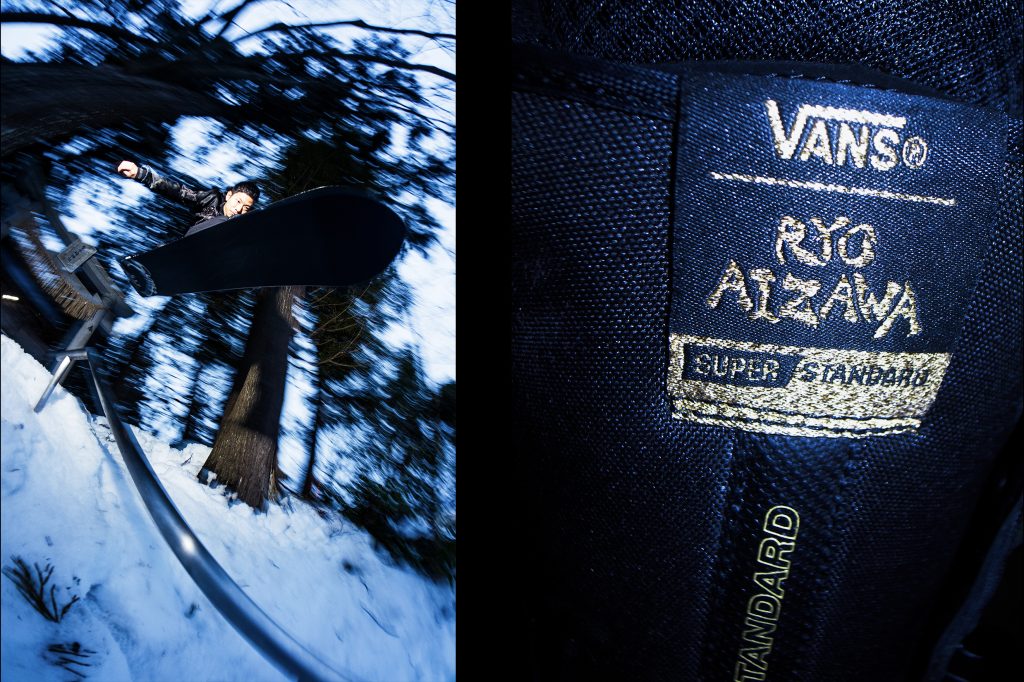
Ryo Aizawa is an enigmatic man to say the least. One of those people who we’re never sure how we’d heard of him or when we had heard of him, we’d just – heard of him. An Instagram breaking clip here and there. Some Japanese tech wizardry. All black, all of the time. This man was very much up our alley. Hearing he had a new Vans boot in the works, there was never a better time to bring him in.
We would go to Japan to find Ryo.
There’s a brilliant mid-century Japanese novel called Tokyo Express by Seichō Matsumoto. It’s a lesson in atmospheric storytelling, of the obsessive sense of procedure that defines mid-century Japan. A detective, Jūtarō Torigai, tries to solve a noir puzzle of doomed lovers, bureaucratic paranoia, and lethal train schedules, unfolding with a certain cold elegance of postwar Japan. It’s a must-read and very much the reference behind my quest to find Ryo Aizawa.
And I am Jūtarō Torigai.
Leaving Sydney, flying to Tokyo Haneda (never, ever Narita) to find Ryo, I had visions of nighttime bullet trains and buses to small snowed-in Japanese industrial estates, showing perplexed but eminently friendly Japanese road and factory workers a scrunched-up photo of Ryo from my top pocket. “Have you seen this man?” to a shake of the head and the reply, “Maybe two days ago” I bow and head off, collar up, head down into the snow. Onto the next town, and the next one, and the next one. Gradually wearing down my finances and relying on the kindness of strangers for food and lodging on my epic quest.
But, I would always be two steps behind. A line in the snow of an industrial estate there, a buckled board in a dumpster there, only fragments and clues of a man who at this point is the Keyser Söze of this piece. Chasing shadows for an entire winter across the industrial heartlands of Japan. At a certain point, slumped in a late-night bar on the outskirts of Toyama, with only 3,000 yen to my name, the dark dawn of realising that my hunt for Ryo is futile is upon me. My wife and young children in England need me, I should return. But not without one last roll of the dice. I would take the ferry, a freezing, overnight snow-clad ferry to Hoddakio, and after a series of buses to Sapporo, it is here that I would find Ryo Aizawa. He’s waiting by a stair set in a Black Skyline GTR, blue neons shine softly underneath. He lights a cigarette, pushes his Oakley Eyejackets to the end of his nose, looks at me and says:
“お待ちしていました”
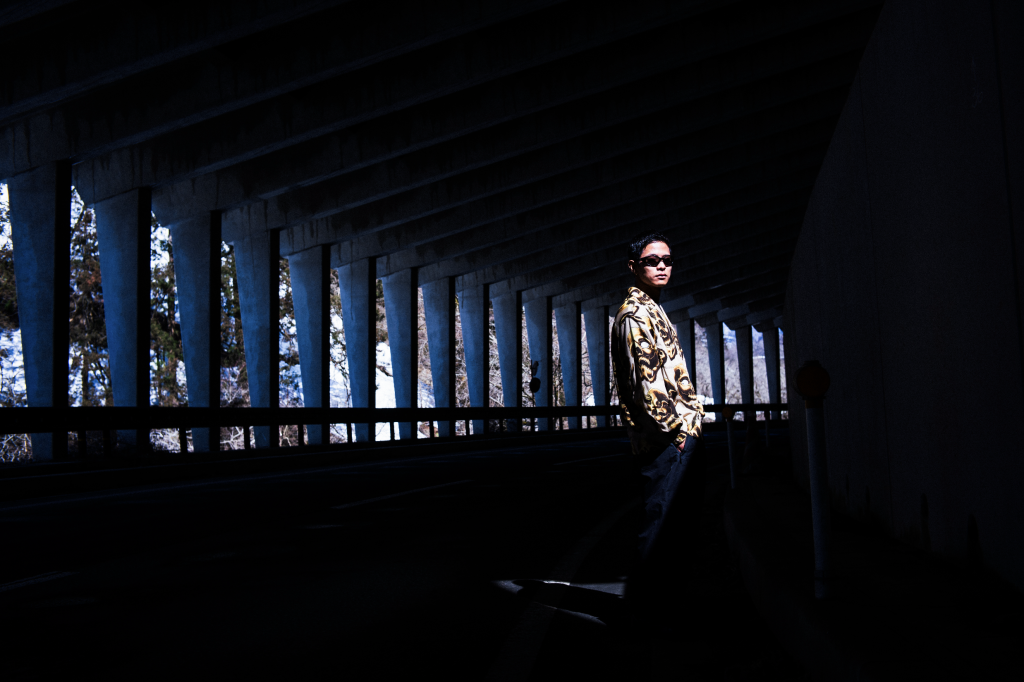
I find Ryo Aizawa about 1 hour and 10 minutes after landing in Tokyo as he walks into my hotel lobby.
My dreams are crashing around me. This was meant to be the peak of my trash prose ‘journalistic’ career. Anyhow, we agree to get drinks at a jazz café down the road. Mine’s a dirty Martini, a habit I have only recently acquired on the L.E.S. but one I find myself getting better at. Ryo’s is a Guava Juice. He doesn’t drink, is gluten-free and has fantastic skin. Notes for us all. A full ensemble cover band play Don’t look back in anger by Oasis loudly in the foreground. This is a far cry from the journey through mid-century Japan I was after – but it’s a good time nonetheless.
We hang in Tokyo for a few days; Ryo strikes me as a very composed yet curious young man. He has a keen eye for details, for fashion, for architecture yet approaches such aesthetic nuances with a wide-eyed enthusiasm, even an innocence to his questions on everything. On cameras, on films, on printing magazines. Each reply thought about, considered and replied to in turn with a hushed “はい” and a bow. “Thank you, I have understood”. We drink cocktails on the 41st floor of the Park Hyatt, which is a must whilst in Tokyo. Not the Lost in Translation bar (punterville) the one on the floor below, which is far more considered. Dirty Martinis flow whilst Ryo sips mocktails and takes it all in. A new frontier for Mr Aizawa.
The sun sets over Tokyo.
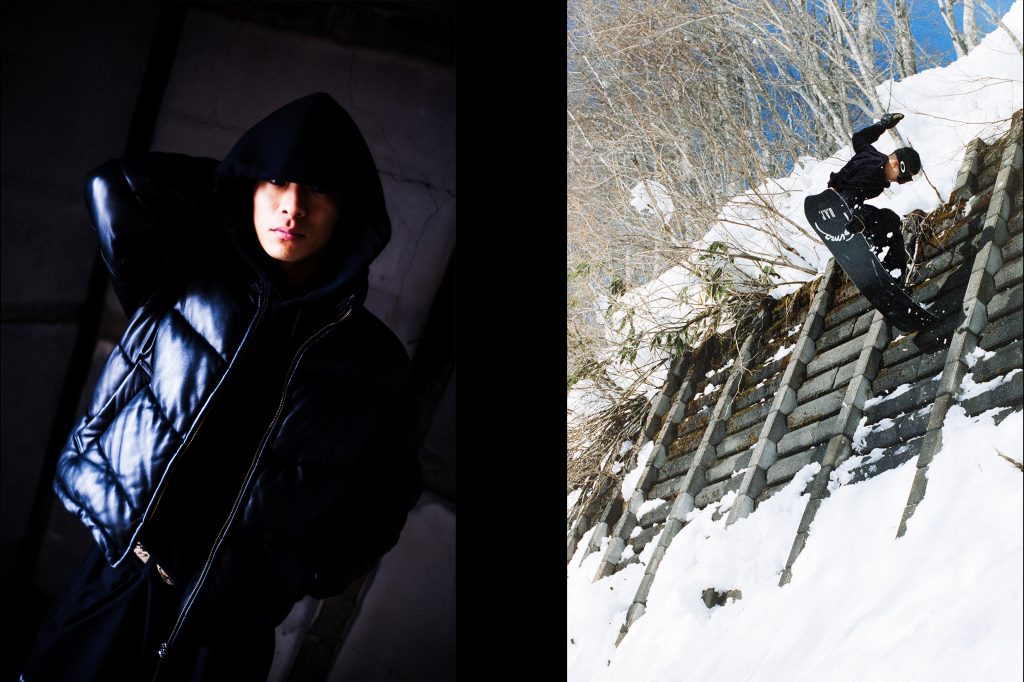
So, Ryo, where did it all begin for you?
I’m not really sure where the beginning was. It feels like it all started without me even noticing. There wasn’t one defining moment, but if I had to say, being born in Japan and discovering snowboarding was probably the start of it all.
And how did it develop from there?
After finding snowboarding, I just rode however I wanted. Nobody really taught me, and my parents didn’t snowboard either, so I was free to figure it out on my own. In a lot of ways, that’s still how I approach it today.
When you snowboard, do you consciously think about beauty and style, or is it more instinctive?
I’m really just doing what feels right to me.
Within Japanese snowboard culture, what has influenced you the most?
Probably the older riders I looked up to when I was in elementary school. Back then, I didn’t really understand much, but seeing those guys riding street spots in skinny pants, leather jackets, no beanies, and no gloves looked incredibly cool to me.
Are there any particular people who have inspired you?
A lot of people. In Japan, definitely those older riders I just mentioned. I was also heavily inspired by the people behind Vans’ LANDLINE project.
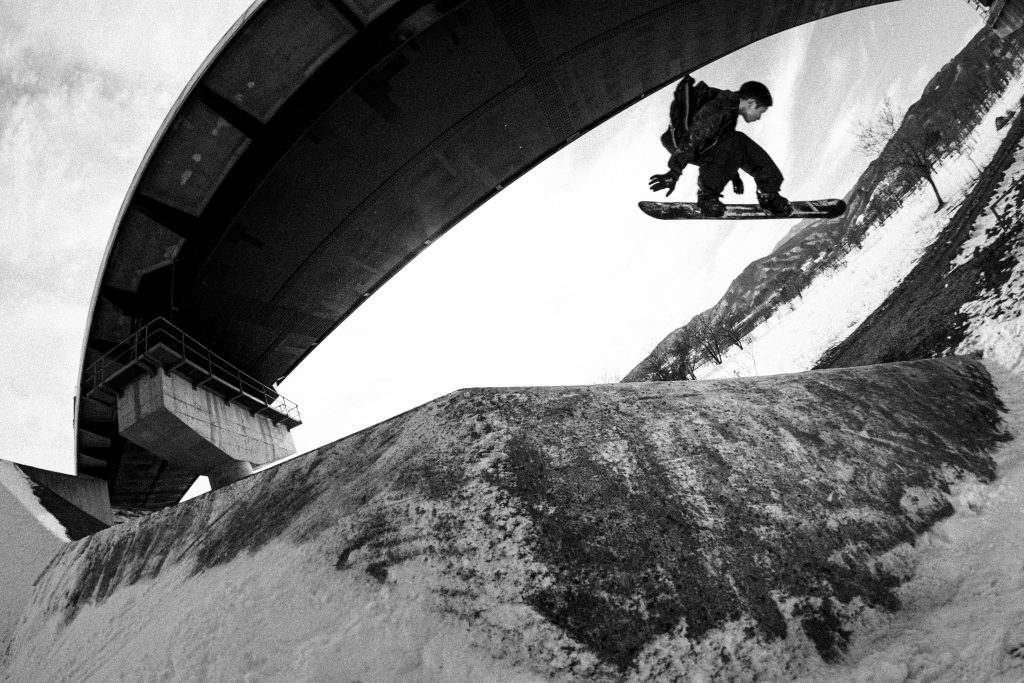
Do you think Japanese culture as a whole influences snowboarding?
Absolutely. Things like humility, strong personal conviction, the way people carry themselves, and a unique sense of aesthetics. I think Japanese culture has had a huge influence on snowboarding.
Do you approach filming differently than when you’re just riding with friends?
I used to see them as completely different, but now they’ve become quite similar. Whether I’m filming or just riding, I’m really doing what I want to do. It’s the same kind of riding, just with a little more intensity. When filming, though, I’m definitely focused on creating something visually strong.
What makes a spot worth putting in the effort and taking risks for?
These days, I don’t really ride spots that feel like a huge effort. If I want to do something, I’ll do it. If I don’t want to do it, I won’t – even if it’s considered an amazing spot.
It feels like snowboarding and fashion are closely connected in your world. Have you always cared about clothing?
I’m not sure if I’d call it fashion, but I definitely have my own standards and sense of aesthetics. I just wear what I like. I’m not particularly interested in trends, and sometimes I’ll even cut the brand tags off my clothes. It’s really just another way of doing things the way I want.
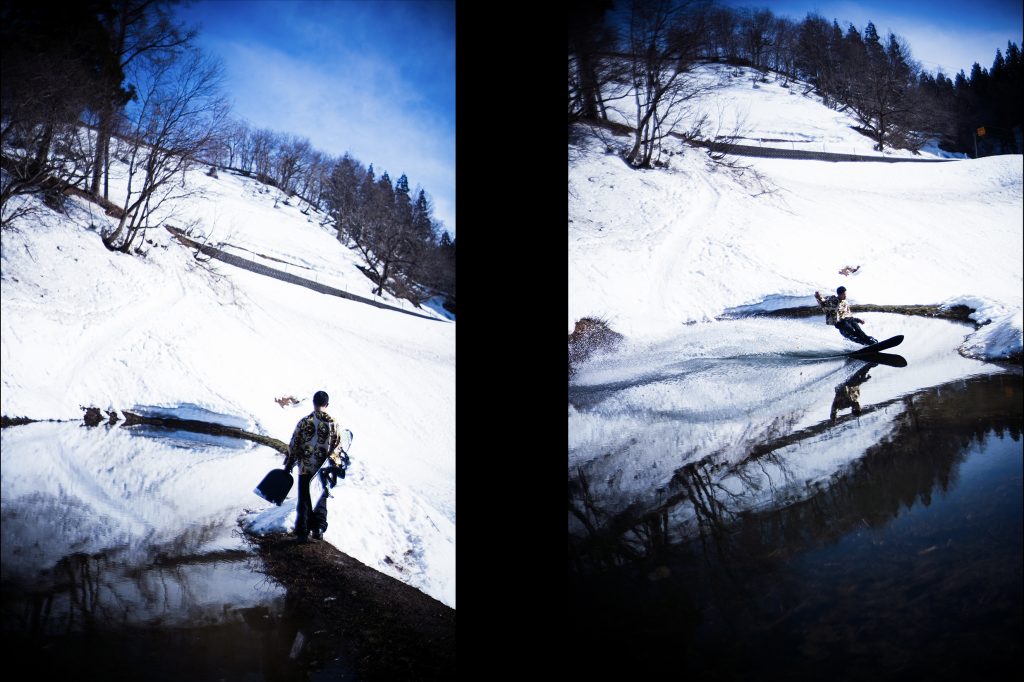
Among all the places I’ve visited and people I’ve met, Japanese street snowboarders seem to have exceptionally good skin. What’s your skincare routine?
That’s a funny question.
I don’t really have a skincare routine. I think it has more to do with Japanese food. I travel overseas often and enjoy eating local food wherever I go, but in the end, Japanese food seems to suit my body best. I think diet is probably one of the reasons why Japanese people tend to have good skin.
Outside of snowboarding, are there any brands or subcultures that inspire you?
Lately, I’ve been drawing a lot of inspiration from things outside of snowboarding. But it’s not really one specific brand or culture. It comes from a mix of things – Japanese culture and tradition, board sports culture, street culture, Tokyo, music, and many other influences.
What goals or ambitions do you have for the future?
Right now, I don’t have any clear goals or ambitions.
Every year my circumstances and way of thinking change completely. Even the version of myself from last year couldn’t have imagined who I am today, and sometimes reality surpasses anything I could have envisioned.
So rather than deciding who I’ll be in the future, I’m focused on living in the present.