Words by Zack Raffin
There’s over a billion active surveillance cameras on Earth.
From ring cameras, high def satellite imagery and ever-growing facial recognition technology, it’s no longer a question of if we’re being watched and more so what does it mean?
I met with Quinn Matthews outside of a sidewalk bar in Los Angeles to talk about his latest body of work on this very subject matter. He immediately pointed out to me the 3 security cameras pointed in our direction.
After starting his career as a surf filmer, Quinn’s lens quickly began to widen, making his extraordinary journey to this highly topical matter of surveillance all the more interesting. From deep dives in Nepal and Haiti, multiple photo books and a highly political body of work centered around the U.S. elections, Quinn decided to double down on himself- enrolling in Cal Arts to get a Masters in photography.
It’s there that his journey into surveillance imagery begins. Despite the 3 security cameras already rolling during our conversation, I hit record for what was a titillating 45 minute conversation where Quinn took me deep into the matters of security, ethics, and photography of which his mind has been marinating for the last 2 years.
When did you sprout this obsession with surveillance?
Before I got to school I was trying to make these sculptural photographs that were seen as images but weren’t actually true photographs. When getting your masters in photography, there’s an expectation to actually take photos. When thinking about the truest photograph I can make, surveillance kept coming up.
Surveillance imagery was something I couldn’t control. It limits your authorship as an artist. Then I realized that there actually weren’t any security cameras on campus at Cal Arts, which was bizarre. You’d think there would be security cameras but because it’s an art school they’re ideologically opposed to that. That acted as a catalyst to this really specific project, and at that point I got the idea to have a Private Investigator follow me.
Walk me through the logistics of setting yourself up to be followed by a Private Investigator. How did you set this up to make it feel as natural as possible?
It was the end of 2024. I was focusing a lot of my work on the election, so when that ended I wanted to re-focus on another thought provoking concept. In November I soft pitched the idea of being followed to my brother to see his reaction, who was definitely a bit concerned. As I thought about it more through December the sentiment shifted towards “you should do this”. Then over the winter holidays I wired him the money and sent him four different P.I’s on Yelp to pick from. I didn’t know which one he picked, I just told him with this $2,500 get as much surveillance as you can of me from January 1st through February 14th.
All I knew was that he confirmed someone. So starting January 1st I started to become hyper aware of what cars were following me etc. Even though I knew I was the one who set this up, it was a weird position to put myself in. Then on January 5th the fires started in L.A, so there’s a natural disaster happening while you’re in a performance you set up for yourself. Which made me think more about what I was doing… if I got seen volunteering it would feel performative, but if I wasn’t volunteering it would feel weird too.
Did you change your day to day routine within those 6 weeks? Or did you just go about your day normally?
I gave myself the parameters of those 6 weeks and my brother told me there would be 8 days of surveillance, so I knew sometime in that window there were 8 days I’d be getting followed. I tried to not change my routine at all other than the fact that I tried to do something every day. If I found myself working until 4 PM one day I’d force myself to get outside and do something in case I was within the window.
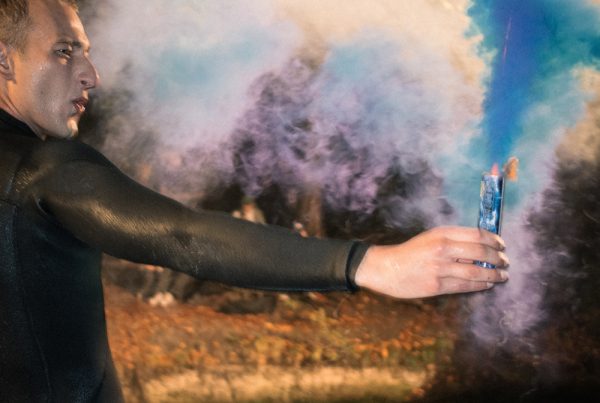
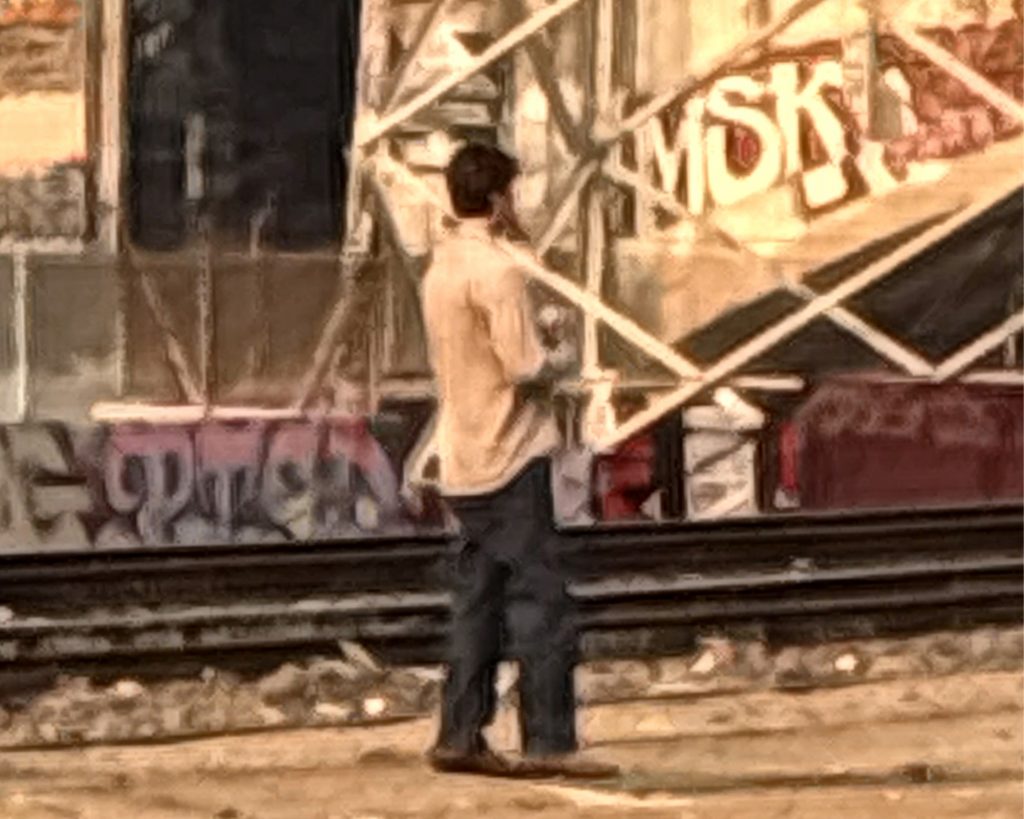
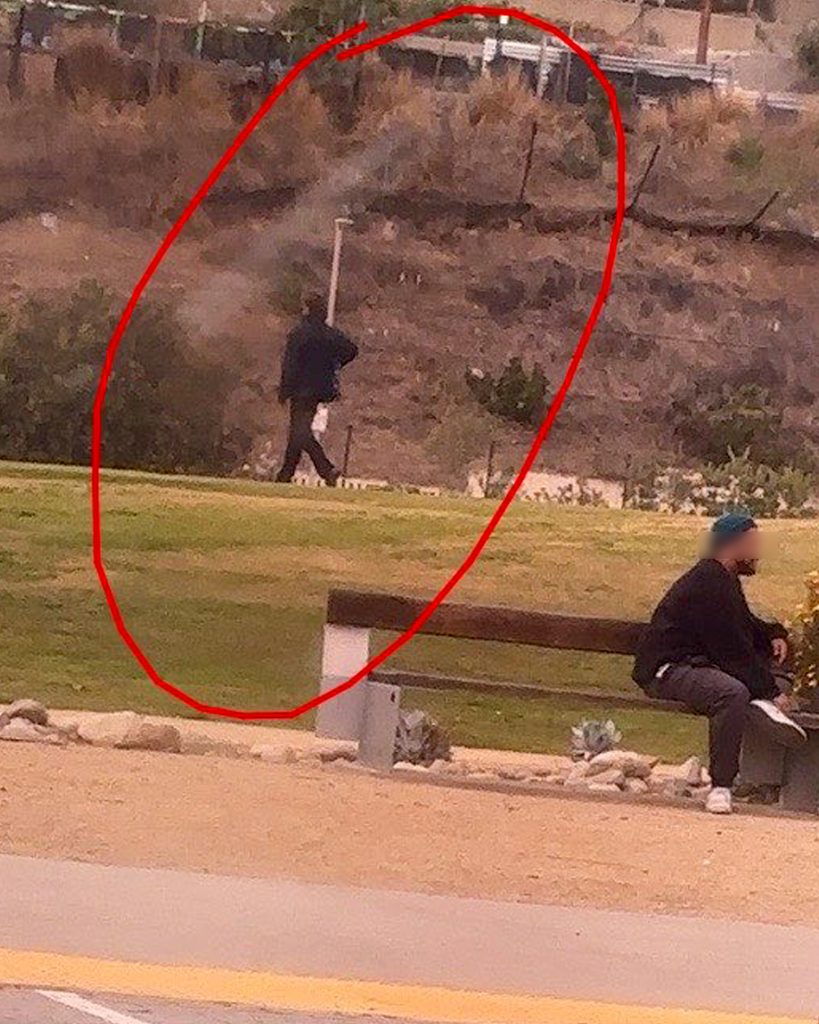
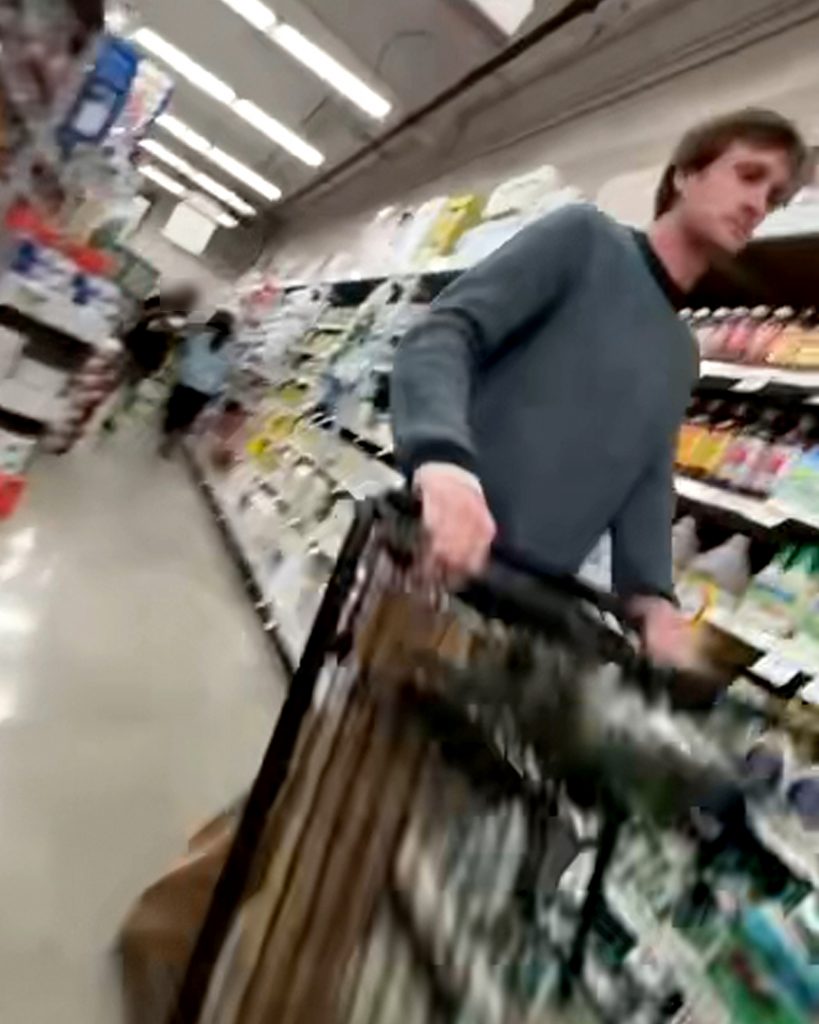
I didn’t want to author any narrative because the whole point was to make a “true” photograph. So most of the pictures are of me running errands, filling up gas etc. There was a lot of time where they were sitting outside of my studio waiting for me.
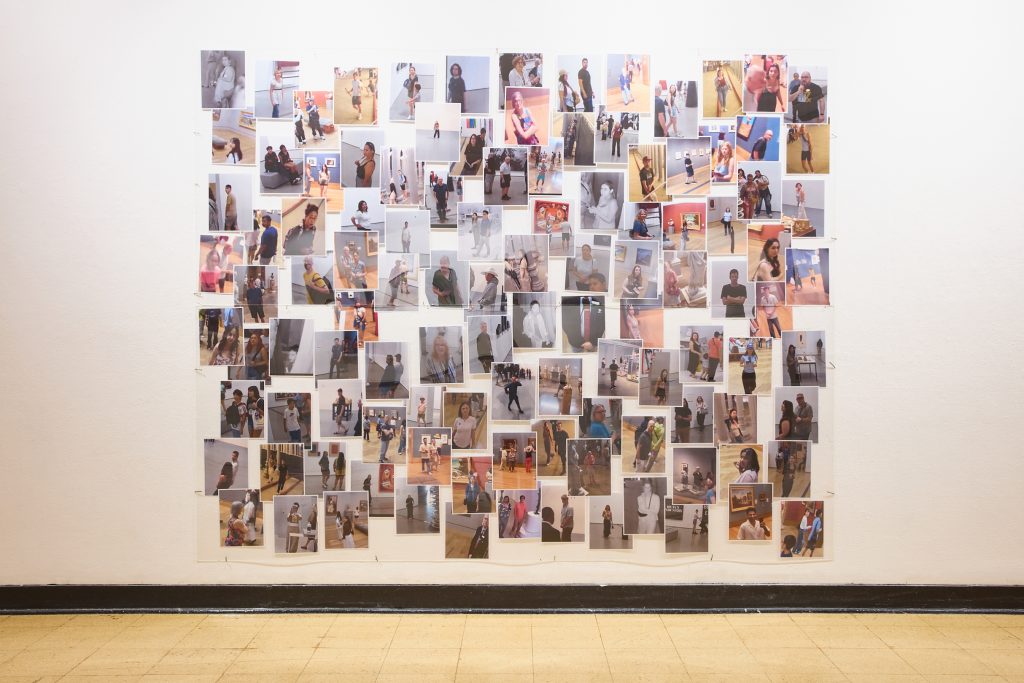
I thought they wouldn’t have a bias on me, but you can see through the course of the arrangement that wasn’t true. The premise my brother told the PI was that they had lost contact with me and were just looking for observation: not to interact but to know what I was up to. I don’t think the PI trusted that story, so they kept a distance in the beginning out of caution. As you see the PI get more comfortable with me you can see them get significantly closer to me and bolder in the way they’d photograph, they’d do shots walking directly by me while videotaping me. In the end they took 17 photos, 14 of which wound up in the series.
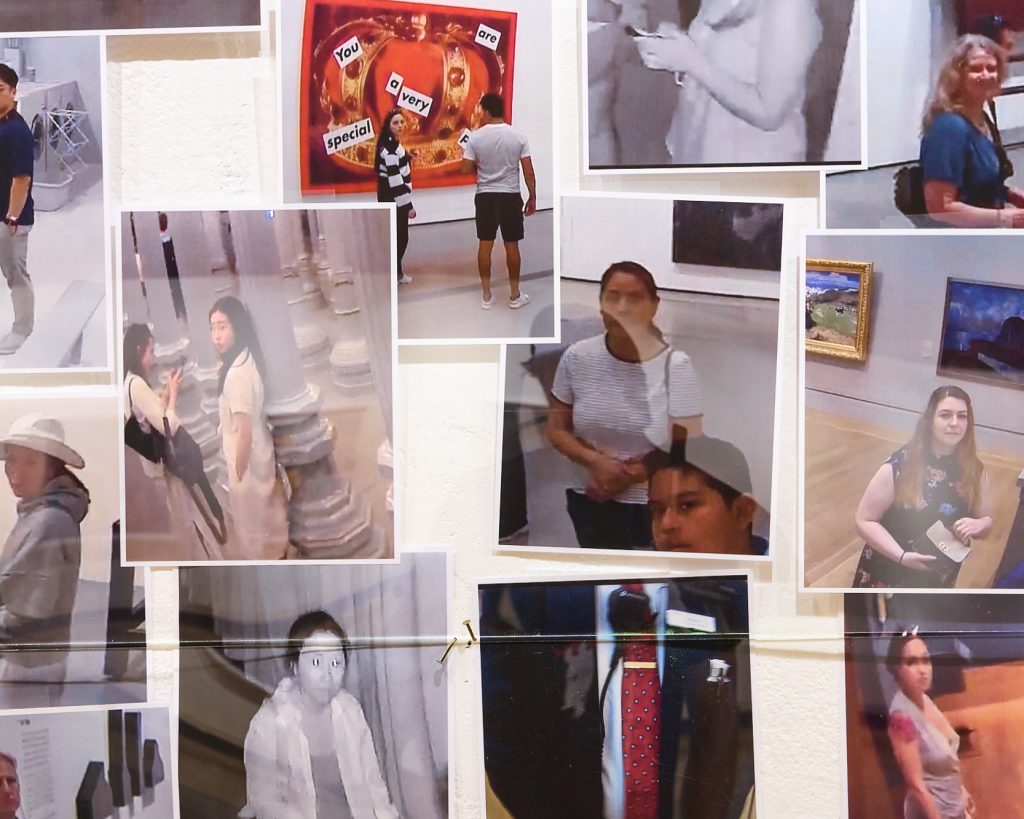
So you complete this project of being followed and decide to take this a level further with your next series. Walk me through how you landed on security camera feeds?
I want to make art that’s urgent, topical and political in the sense that it’s current regarding what’s worth presenting. Security feeds are something that started as a policing manner and military manner. Then (like everything in the military) that innovation trickled down to the point of civilian use, to the point we began policing ourselves. At what point does that become too much?
One day I was at a hardware store checking out and noticed the photo montages of people where they zoom in on their faces and write “THIEF: BANNED FROM STORE”. It got me thinking that these are photos we see all the time but never think about how invasive these security cameras are. These aren’t police or some sort of validated security force, it’s the owner of that store putting those photos up to shame people in an effort to police himself.
That’s when I got into the idea of focusing on security feeds. Taking photos that we see all the time but don’t view as “photographs” in the artistic sense, then turn those into material. Surveillance cameras are everywhere. Whether it’s those photo montages in a store or scrolling on social media and seeing people on ring cameras stealing or losing their minds, they’re a big part of our lives… I mean we’re looking at 3 of them right now.
Where did you access the security cameras? What was your process like selecting which feeds to hone in on? How much time did it take for something to peak your interest- or did you find it all interesting?
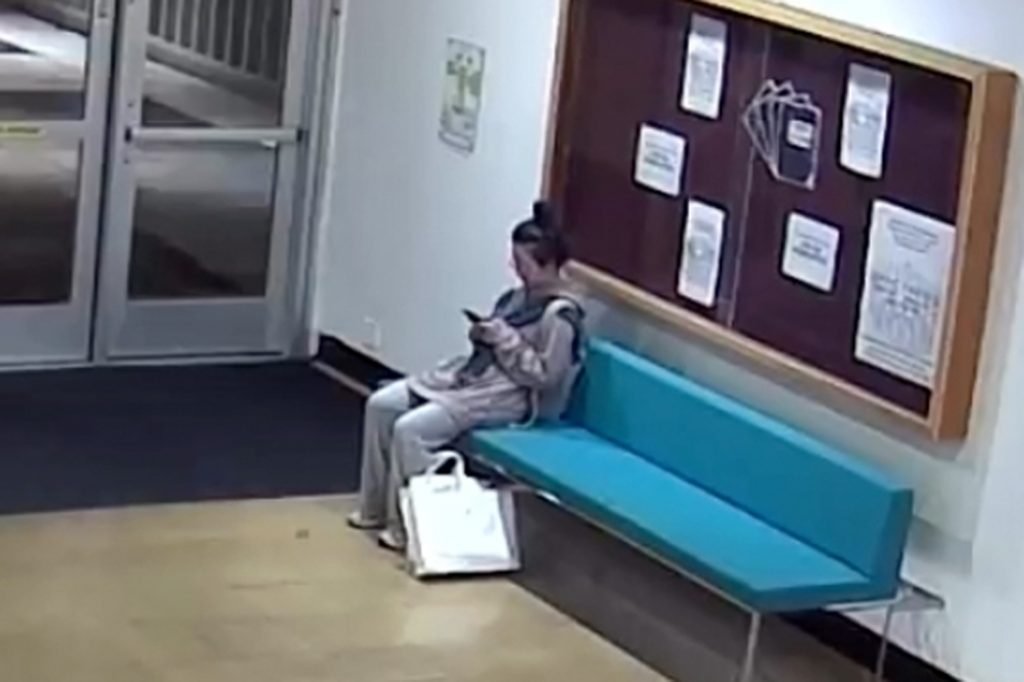
There’s a website where you can tap into feeds from b-grade security cameras around the country, all the footage gets uploaded to a server and if you don’t password protect it anyone can access it. Someone made a website where all of those unsecured servers are put into one and you can scroll through hundreds of pages of security cameras. The irony of an un-secured security camera wasn’t lost on me…
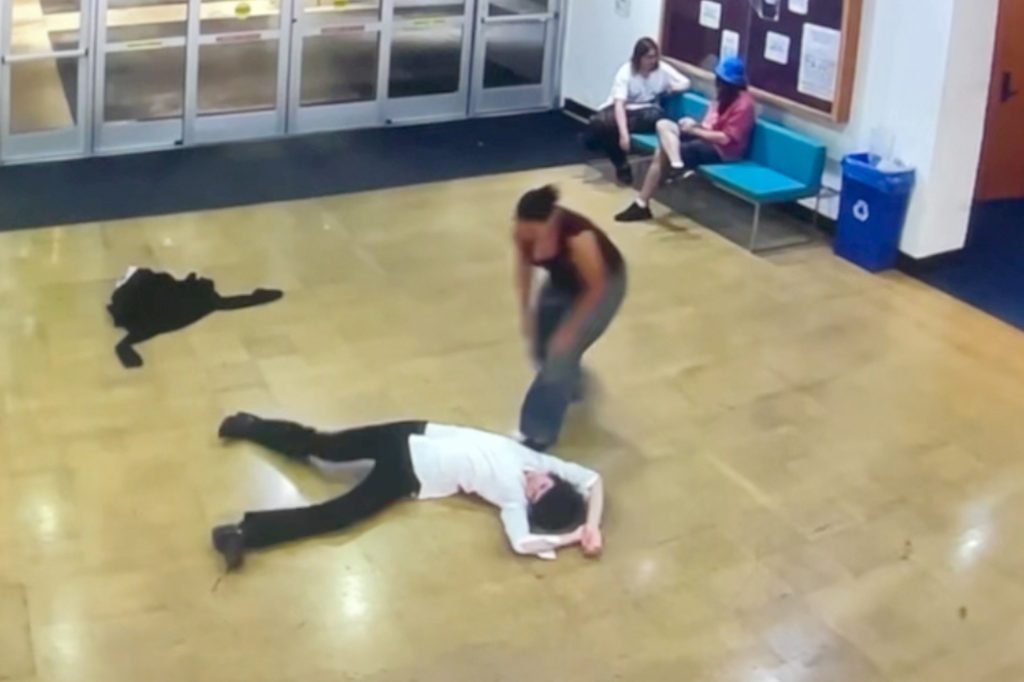
I wanted to talk about the US, so I filtered those cameras down feeds here in the states. Then I tried to pick ones that had the possibility for something to occur. The presence of people and if they could or would fill the space like the front door or inside of a bar. These cameras are almost predictive in the sense that at some point something is going to happen, that’s why someone set up the camera.
Then came the idea of framing. Picking cameras where the frames looked particularly charged. People bring these ideas to the interactions they watch on security feeds because you’re only used to seeing surveillance footage when things go wrong, so I played with those ideas when taking images for the series.
Amongst photographers there exists this intense technical obsession around cameras they choose to use (or not use). Taking that the opposite direction and using the shittiest most baseline cameras for your masters in photography is interesting, how did that impact what you what trying to do.
All the cameras were really low quality, and that really worked in my favor.
A big part of this project was to point at the ethical gaps of what’s wrong with surveillance imagery and show how it’s invasive. To do that you have to question how you have to question how to ethically show an image when you’re trying to communicate the unethical aspects of it.
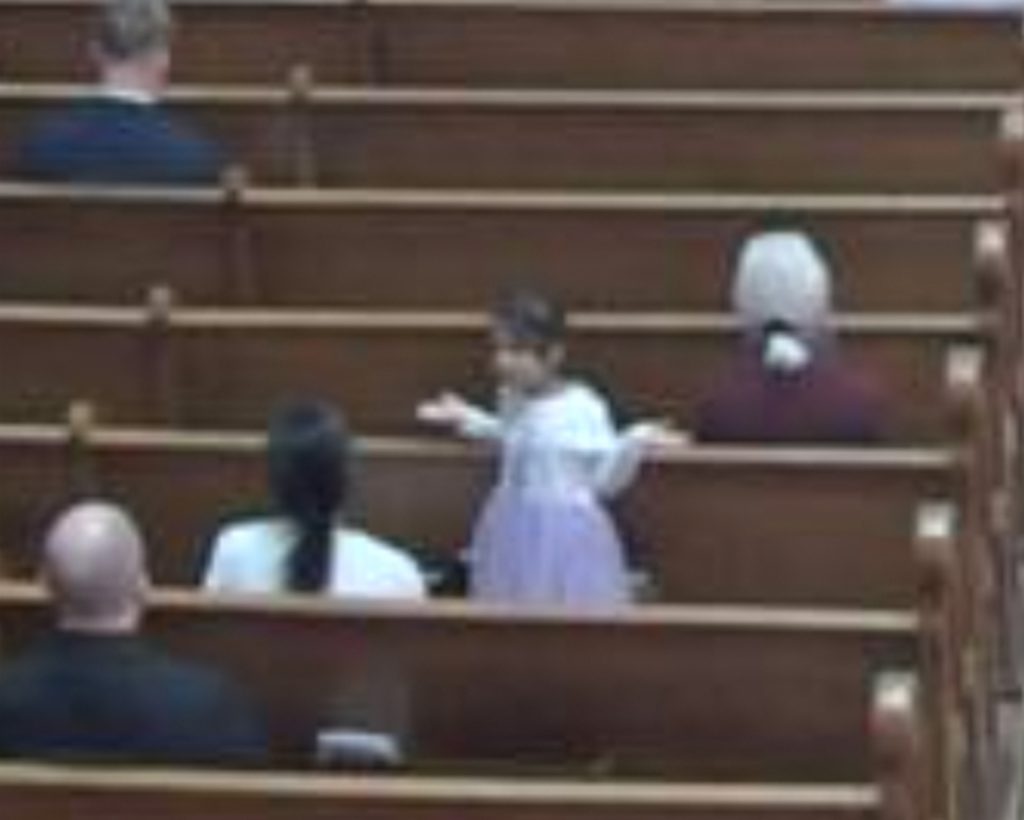
Because of that, I included two images that were kind of humorous as an access point for people. One of two dogs playfighting and another of a child in a church shrugging her soldiers.
All of the images were smaller and higher res on the computer, but when they were blown up to 50 inches faces became indiscernible and proportions were off. That’s all to say: the lower the quality, the easier it became for me to conceptually author the images without it feeling too off base. What I’m sharing is a frame of video whose location and subject are unknown to me, as opposed to someone monitoring their own security feeds, but it was still an interesting ethical dilemma that made the project all the more interesting. And then I wondered… what if I actually did witness something violent when I was watching these? I wouldn’t be able to do anything about it, and all of that is wrapped into what I was speaking to within the project.
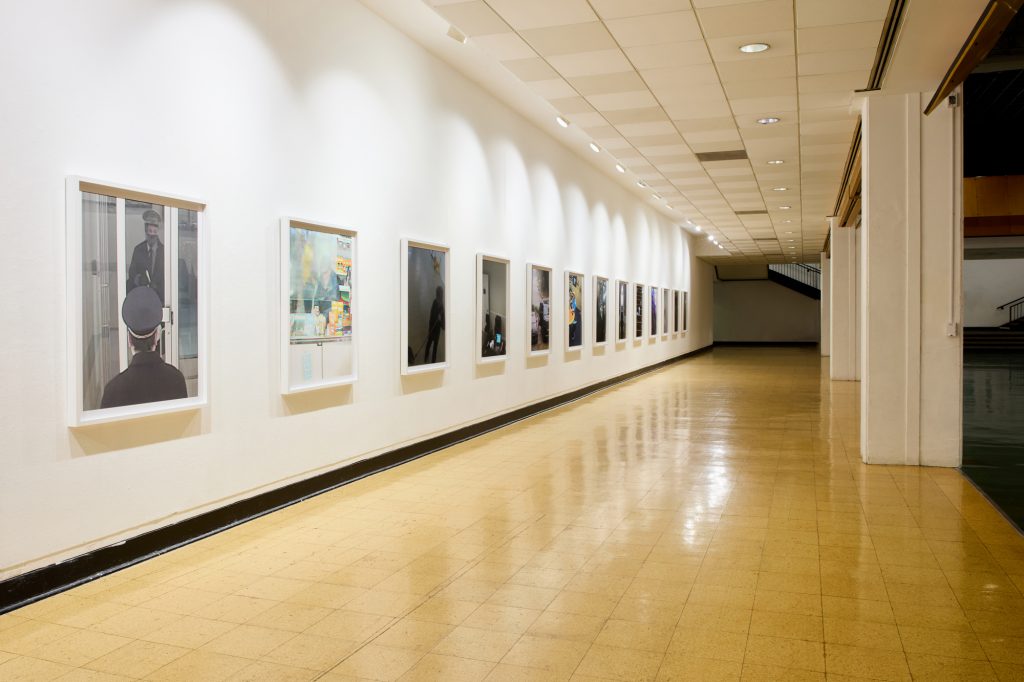
Your artist statement mentions AI and its erosion of an expectation of truth. How does AI’s presence impact both your optimism for photography as a medium and your ideas of humanity’s direction as a whole? Would you say this is more ethical than that?
I would say these are truer than most manipulated images, because they’re actually real. It’s an actual event that’s happening vs. something that might be generated
The difference with surveillance imagery is that our perception isn’t real but the photo is. People slip into that expectation of their being an event really quickly. There’s a power dynamic when looking at security footage where it becomes the viewers responsibility to judge people. You might see a situation playing out, but your perception of it won’t be. Then if you’re actually in a position of power when surveilling people and you have the opportunity to act on it, that’s when those ethical questions come into play.
How does the presence of manipulated imagery impact your optimism towards photography in your post grad life?
Images are more dangerous now than ever. Whether you’re sharing photos or manipulating them, you can really target people with imagery as a photographer. In the past there was a possibility images weren’t real, but it was more obvious. It’s getting more and more difficult to discern what’s real vs. what’s not, so looking at what is a true photograph vs. what your perception is allowing becomes more interesting.
Surveillance footage is still used as evidence in court or for insurance claims. Once that starts to become manipulated we begin to enter into really scary territory.
There’s so much to look at and so many photos out there, you can’t really trust any of it. I’m interested in making photographs that make people question how we see photographs as a whole. More looking, less showing.
Click here to check out Quinn’s work.