Words by Josh Barrow | Photography by Ella Mitchell, Michal Augustini and Kelly Nikou
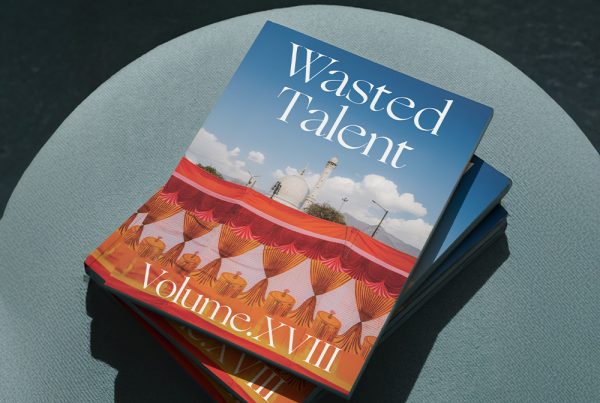
This article was originally published in Volume XVII, February 2026
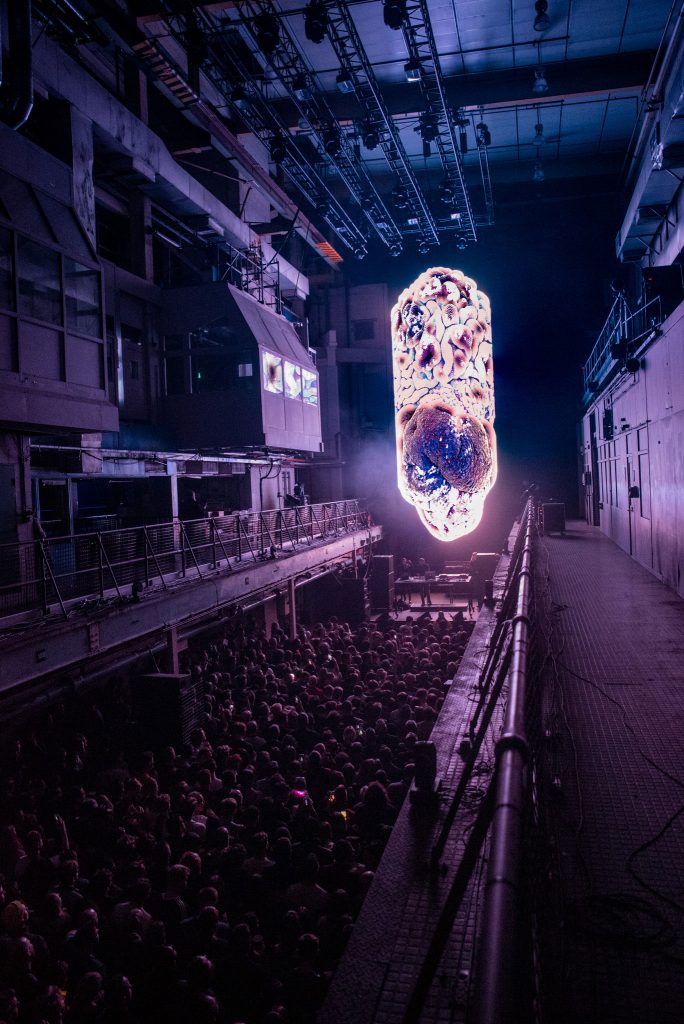
Trained originally as a computational biologist, Max Cooper’s background in mapping complex systems runs subconsciously through everything he creates – from intricately layered compositions to large-scale audiovisual performances that dissolve the boundary between live concert and art installation. What he makes isn’t just music to be heard, but something to be felt and inhabited: work that sits at a rare intersection of science, sound, and human emotion.
Whether operating in the spaces between club music and ambient composition, or collaborating with visual artists, coders, and filmmakers, Cooper approaches sound as a means of exploring perception.
Our first encounter with Cooper’s world came through Repetition, a collaborative piece whose hypnotic visual language lingered with us. From there, we found ourselves moving through multiple albums, discovering different sides of his work. With last year’s releases of On Being and 8 Billion Realities, alongside this year’s forthcoming large-scale live shows prep, it felt like an exceptionally exciting moment to sit down with Max and talk about his ever-expanding catalogue of achievements.
You began your professional life in the science world. Can you tell us a bit about what you were doing before making music?
I was making simulations of the evolution of networks of interacting genes. Similarly to how AI models are now optimised for human language and other tasks, evolution has used the same trick for billions of years to build little algorithm-like information-processing networks inside every living cell. Except they’re optimised for how the cell responds to its environment for survival and reproduction. The trick being that even simple networks can do a rich variety of things if we have a way of randomly changing them bit by bit, whilst pruning away the changes that make them behave less like we’re after.
At what point did it become clear that music could, or would, become your long-term career?
It snuck up on me. I had finished a Postdoc and decided to give music a go for a few months until I found the next job, but I never did. I had been working hard on music for 10 years already at that point, so it wasn’t out of the blue, but it wasn’t planned either. I think it’s impossible to plan a job in music; you just do what you love for as long as you can and see how it goes.
You live in London these days, unless we’re mistaken. Is this where you’re making the majority of your music now?
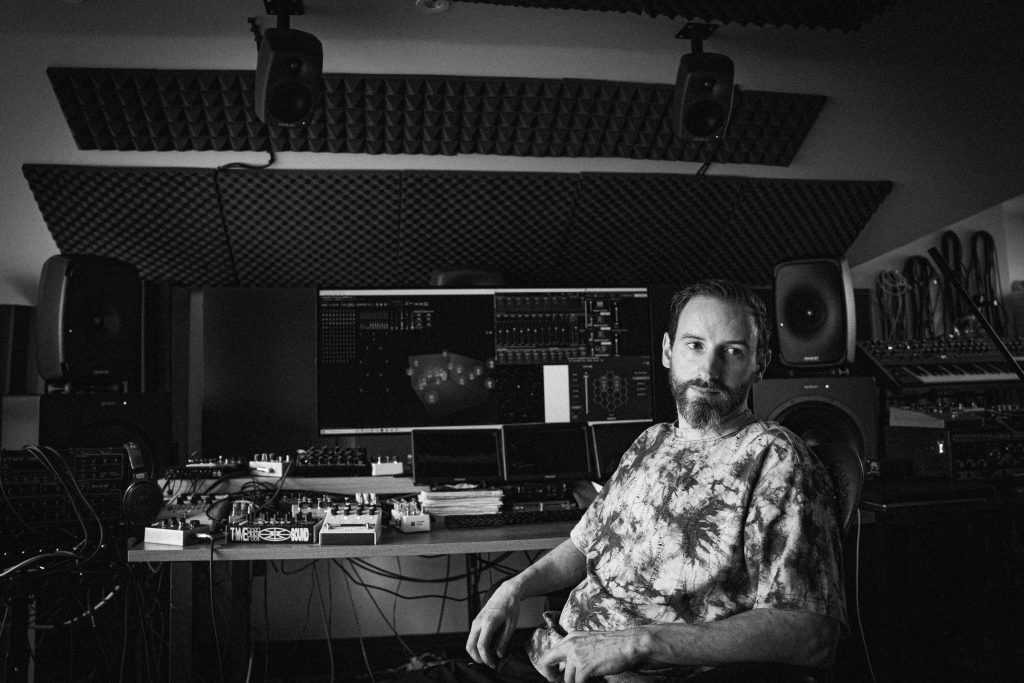
Yes, I’m in South London. I have my studio in my house, more of a converted bedroom than some super pro studio. I like to work into the night and at every spare moment when I’m in the midst of an engaging project, so it helps to have the studio nearby so I can dip in and out quickly. The only downside is a lack of separation between work and time off, but I think working in the arts is like that anyway; it’s less of a job and more of an inescapable urge to create for whatever reason that drives us. There’s plenty of Zoom meetings too, a lot of my day is like any other business working with the team and logistics of touring and the record label and installs, it’s not all wild creation time jamming on synths.
Your work draws on traditional electronic genres, scientific ideas, and visual art. How do you go about combining these elements, and does one tend to come first?
When I’m away from the studio, I spend a lot of time reading and listening to audiobooks, and thinking about ideas, which I note down. At any one time, several audiovisual albums are in the works, brewing from hundreds of individual ideas for visual and/or musical projects connected to scientific or artistic themes. Some or other conglomerate of ideas will grab me at a particular time or in response to a brief, so when I’m in the studio I delve into those, making new things as planned in the notes, but also drawing on a conglomerate of musical techniques to experiment with – sometimes the plans I made in writing work, sometimes they don’t and the composition experiments take things in a new direction. It’s a hill climbing process much the same as a self-optimising network, where as long as you know what is better or worse according to some goal, you can keep making iterative improvements to eventually polish your turd into a gleaming turd, using only randomness if you have to. I practice so there’s lots less randomness now than when I started, but that’s not necessarily a good thing. I try to push myself into untested realms when I have time, as that’s where the best bits happen.
Do you have a specific system or method that you work from?
The main one is how it feels. My music is all over the place in terms of genres or traditional structures, but there’s a felt thread running through, primarily in the chord progressions, but not always. That is complemented by a process based on the ideas. That is, how can I tell the story I want, technically, with the tools I have available? So that side of things will define software, synths, compositions, and processing techniques, and make sure the musical structure is in some realm representative of the idea. That’s the logical part, combined with the intuitive part: how does the music feel, how does the idea feel, how do I make the two one and the same?
Technology plays a central role in your music without overpowering it. What tools or systems are essential to how you compose?
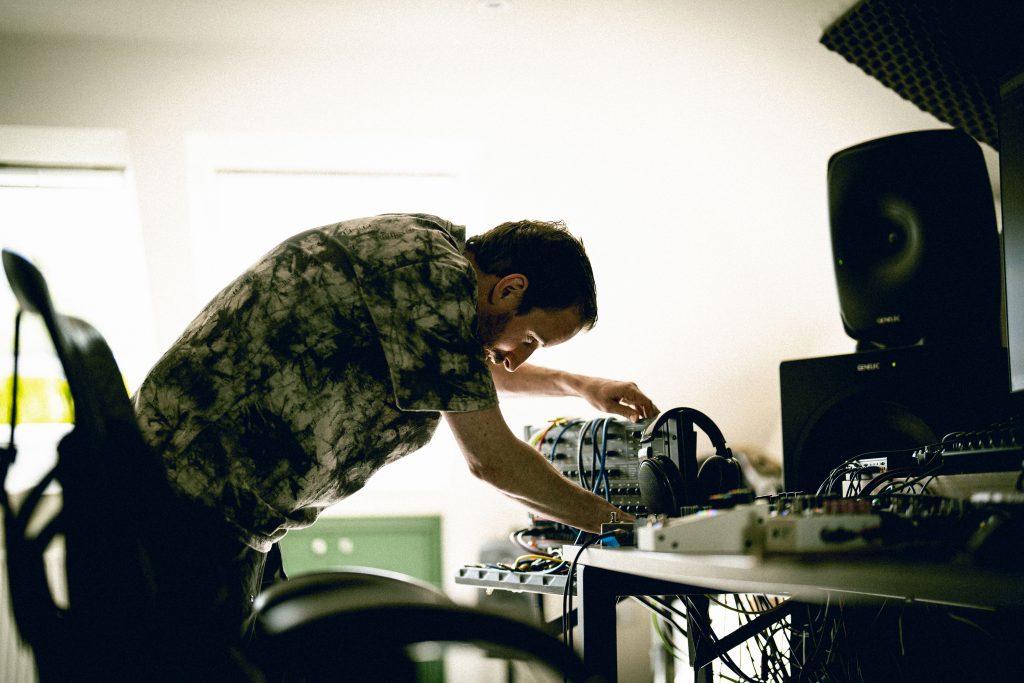
Probably the only essential one would be the computer; beyond that, I have lots of favourites, but there’s an endless world of different possible ways to make things. Ableton is central to my process, but I’ve also been using Fugue Machine Rubato on the new record, and a lot of things happen in hardware. I’m a big fan of Dave Smith Instruments and have been using the beautiful Genki Instruments Katla a lot recently, too.
For you, what does spatial audio give the listener that traditional formats don’t?
You can make a sound sneak up behind you and go “boo!”….Which sort of nods towards the point….we live in a spatial audio environment, so much of our sense of being comes from the acoustics around us, even though we don’t notice it moment to moment, we just get the sense of existing inside a space. So when you can manipulate that space, you can start to have control over feelings you couldn’t access previously. A rustle in the bushes behind us is not perceived the same as one in front in terms of our emotional response, for good evolutionary reasons. Spatial audio opens many new doors for conveying human emotion and storytelling.
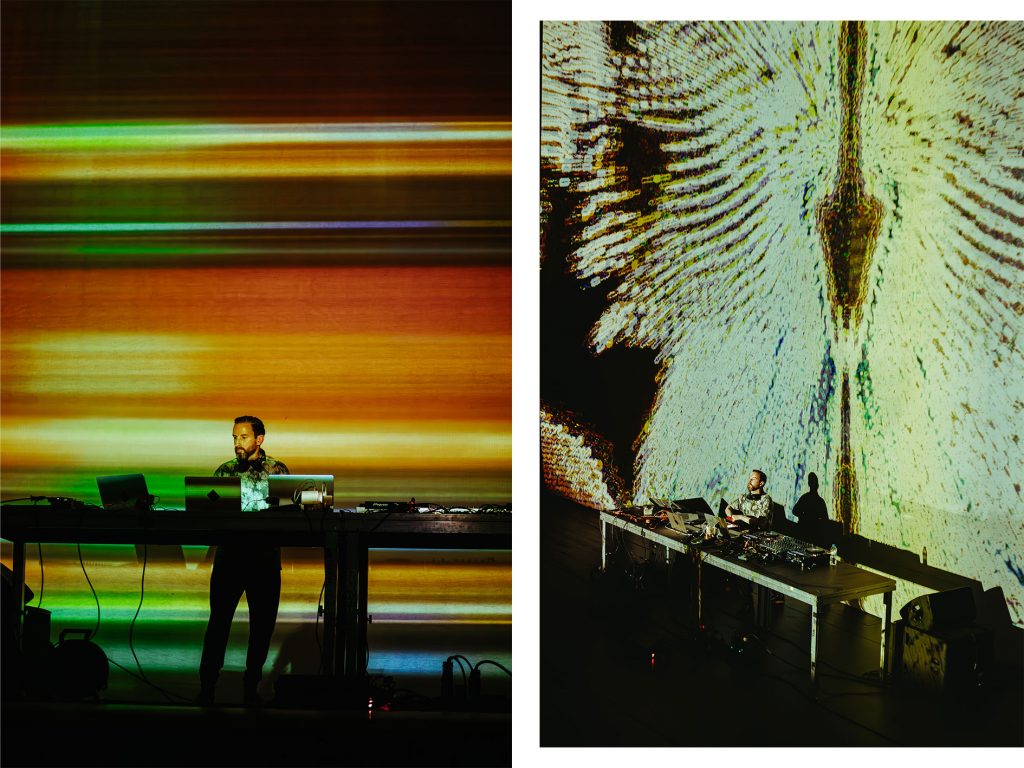
Visual elements have become inseparable from your live performances and your music videos. How do you think about the relationship between sound and image when writing music?
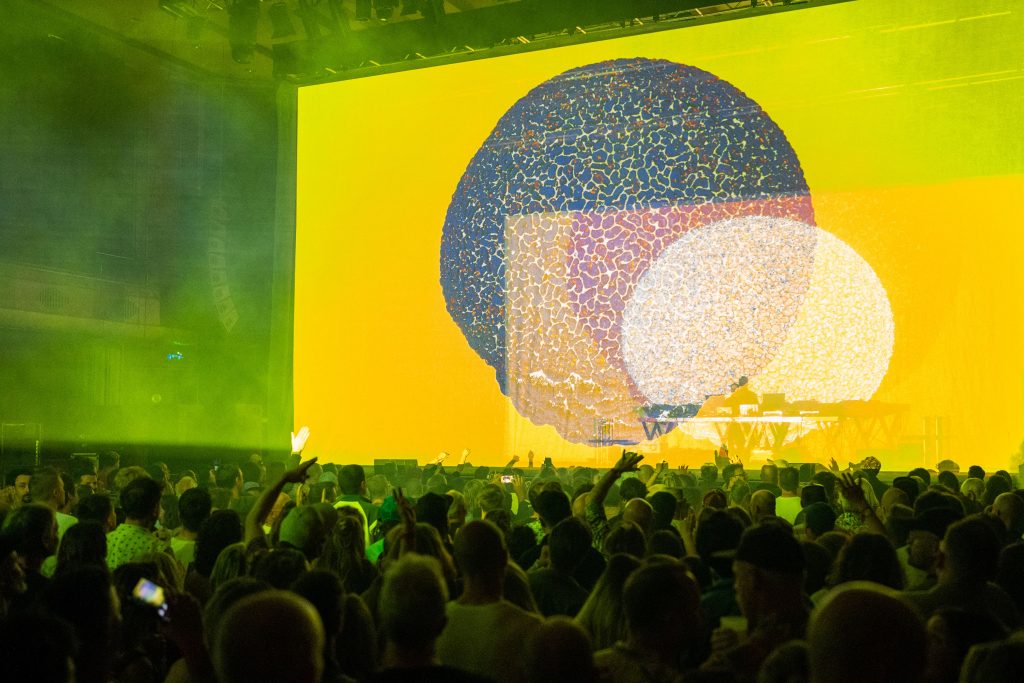
Music contains a lot of visual cues. There’s the ADSR (attack decay sustain release) envelopes which define how synthesised sounds are shaped, with smoothly or sharply increasing slopes and short or long durations, and there’s the structure of the arrangement of notes and rhythms, the spatial form of the elements which literally maps to a 3D object, and the arrangement of the piece, it’s long form structure and layering etc. There are so many things that have visual counterparts on a basic synthesis level. But beyond that, there are the ideas at the source of each piece of music, which define how it looks and how it feels. These written ideas get interpreted by each visual artist I commission for each chapter. There are websites for every album explaining this in detail, for example:
https://onbeing.maxcooper.net/
https://www.yearningfortheinfinite.net/
https://emergence.maxcooper.net/
Collaboration, particularly with visual artists and filmmakers, plays a significant role in your practice. How do you go about choosing collaborators for projects , and do you prefer a close collaboration, or giving them free rein?
I’ll often have a list of ideas I want to realise for an album, and I’ll commission artists accordingly – coders and mathematicians for technical projects, and filmmakers for human stories, experimentalists for stranger chapters, etc. I chat regularly to many artists and bounce ideas around, and sometimes they come to me with their projects for me to score rather than me commissioning them for my own. I don’t have any set format for the collaboration process; some artists like to chat through every scene in detail together. Some like to get the basics agreed on and work more alone. The main thing is finding some way we can both experiment and have some fun. I’ll often change the music in response to the visual projects as well; it’s a two-way street.
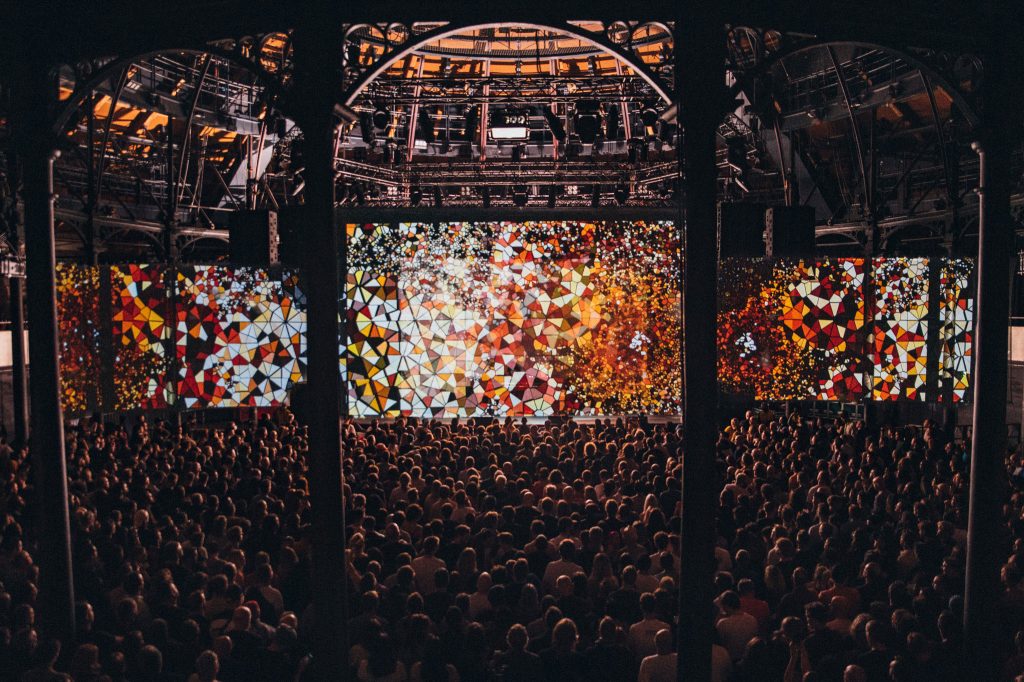
The video for Repetition, directed by Kevin McGloughlin, was our first introduction to your work and remains one of your most-viewed pieces online. Do you think the triptych visuals helped draw in viewers who might not normally engage with this kind of music?
Yeah Kevin and his brother Paraic are amazing artists who I’ve had the pleasure of working a lot over the last 10 years. They’re wild creatives living a different life to most and making different art as a result. Rob Clouth is the same, wherever there’s really interesting novel art there seems to be the same thing down to the mindset and lifestyle. I try to heed that advice and design my approach to thought and approach to work in a way that maps to the sorts of outcomes I want. Which sounds sort of obvious, but it’s easy to think you just need to sit down and try make the thing, it goes a lot deeper than that.
Back to Repetition, it was one project where we had a clear concept to work with, which manifested quite directly musically and visually, which I think is a lot of its power. It was part of the Yearning for the Infinite project, where I was looking for ways to represent our endless grasps for meaning in life, using infinite aesthetics combined with imagery of the environment we live in. Kevin nailed it with his beautiful building collages and scenes of endless human activity, and I actually binned the initial music and reworked it in response to his video.
You move freely between club music, ambient composition, and more abstract forms. Do you find genre useful as a point of orientation, or largely irrelevant?
I reference a lot of genres, but do my best not to get too sucked into any. I played that genre game earlier in my career and found it suffocating, so I started my own label to make what I wanted without needing to worry so much about the spacing of my kick drums.
In the past, you’ve referenced artists such as Jackson Pollock as inspirations, particularly the explosive nature of his work. Can you elaborate on how that influence shows up in your own practice?
Pollock captured something that is rife in nature: the nested, self-similar, yet imprecise form we see in any patch of forest floor. A long-term goal is to try to make the same thing musically. The closer you look, the more you find, as far as you care to go. I’m still a way off, but it’s still moving along with each record.
Who would you have to credit as your biggest inspirations within the music world?
Rob Clouth, Rival Consoles, Alix Perez, Blamstrain, A Winged Victory for the Sullen, Ben Lukas Boysen, Stars of the Lid, Lamb, Nathan Fake, Bjork, Nils Frahm, Bredren, Cesco, Olafur Arnalds, Autechre, Lusine, Ochre, FSOL, James Holden, Leftfield, Ulrich Schnauss, Helios, Lorn, Trentemøller, Duran Duran, Pink Floyd, The Prodigy.
You released your album On Being at the start of 2025, followed by the EP 8 Billion Realities at the end of the same year. How do you balance your time spent creating new work versus performing it?
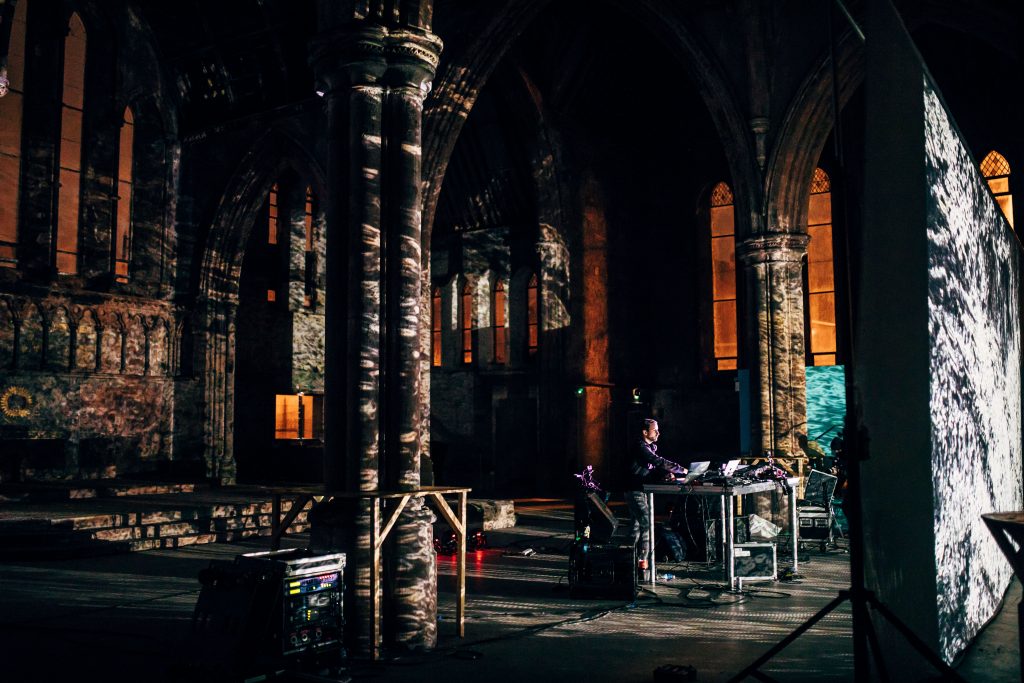
Shows demand preparation and time, but all spare moments are for making new music. I get down if I don’t have that creation time, and I love it when I can focus on making music. That’s why I release a lot, it keeps me sane.
For On Being, you collected anonymous human confessions that became the emotional foundation of the project. How did you go about gathering these, and what drew you to approach the record in this way?
It came naturally from the previous album, Unspoken Words, where I was interested in what I could put into music and visuals that I couldn’t put into words. Part of this led to Wittgenstein’s writing on the limitations of language, which Ksawery Komputery built a real-time text-to-audio syncing system for. I was interested in turning this topic out to the listeners of that record, so we asked them, “What do you want to express that you feel you can’t in everyday life?” I wasn’t expecting much, but when I started reading the entries, it was overwhelming. I realised it demanded a significant project to do justice to what people had shared. Which became the On Being album.
We understand you were deeply involved in a major project leading up to Christmas. Can you share anything about that with us?
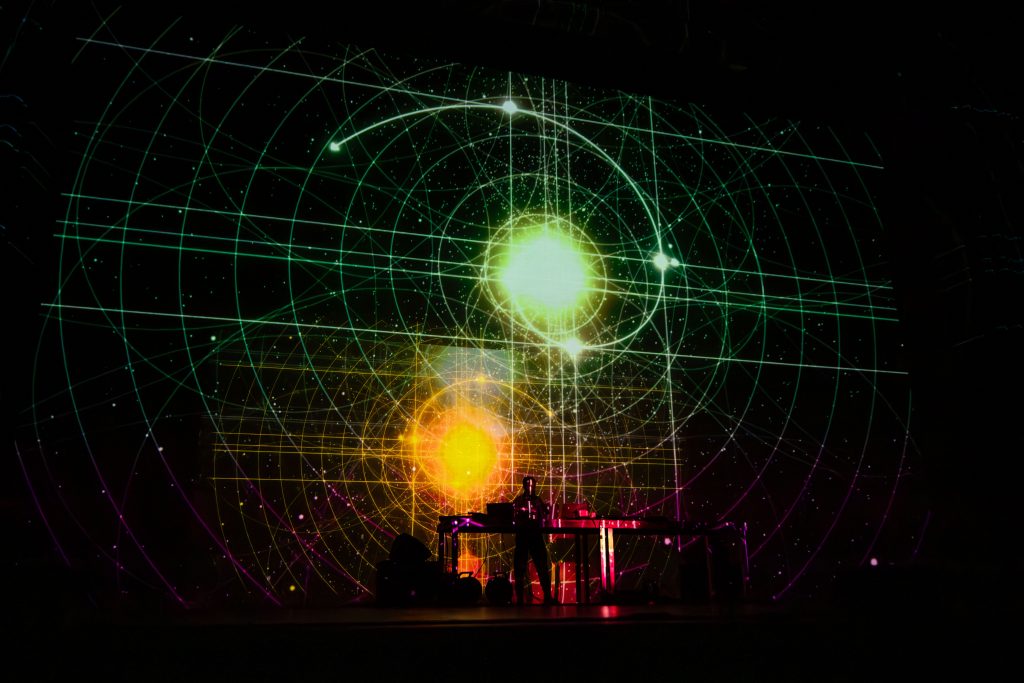
It’s a new collection of music and a live show at the Royal Albert Hall in April, followed by my subsequent tour. I’ve been deep in writing for the last year on it and have been pushing myself pretty hard. It’s taken a bit of a new direction; I think I’ve swallowed another genre and puked it back up (sorry for the imagery, it’s got some of that vibe about it).
How is 2026 currently shaping up for you? (This interview will be published on January 25.)
2026 is looking good. After the new live show and music touring, I’ll be delving into a new DJ-oriented project and getting back to the roots. There’s so much to be excited about in both sides of the live experience, and it’s another opportunity for genre fusing.
Finally, what music do you often listen to that might surprise your followers?
Music is so loaded with context that I struggle to do background music for genres connected to mine, which rules out a lot. So sometimes I’ll put on Bluegrass and bathe in the bejangly delights.