Interview by Josh Barrow | Photography by Carles Medina
This article was originally published in Volume XVII, February 2026
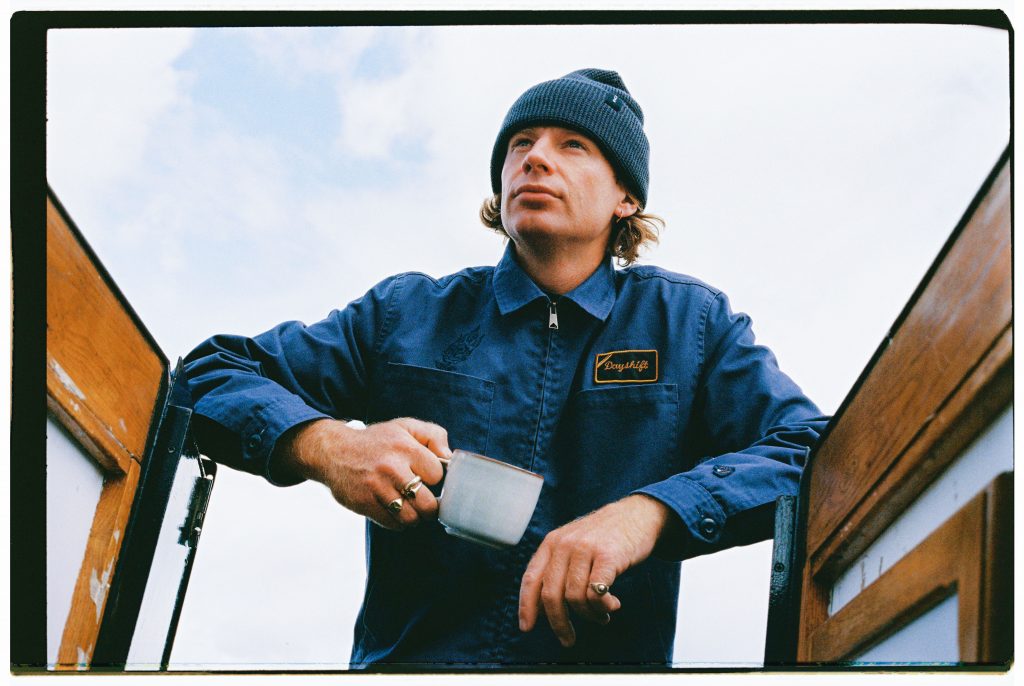
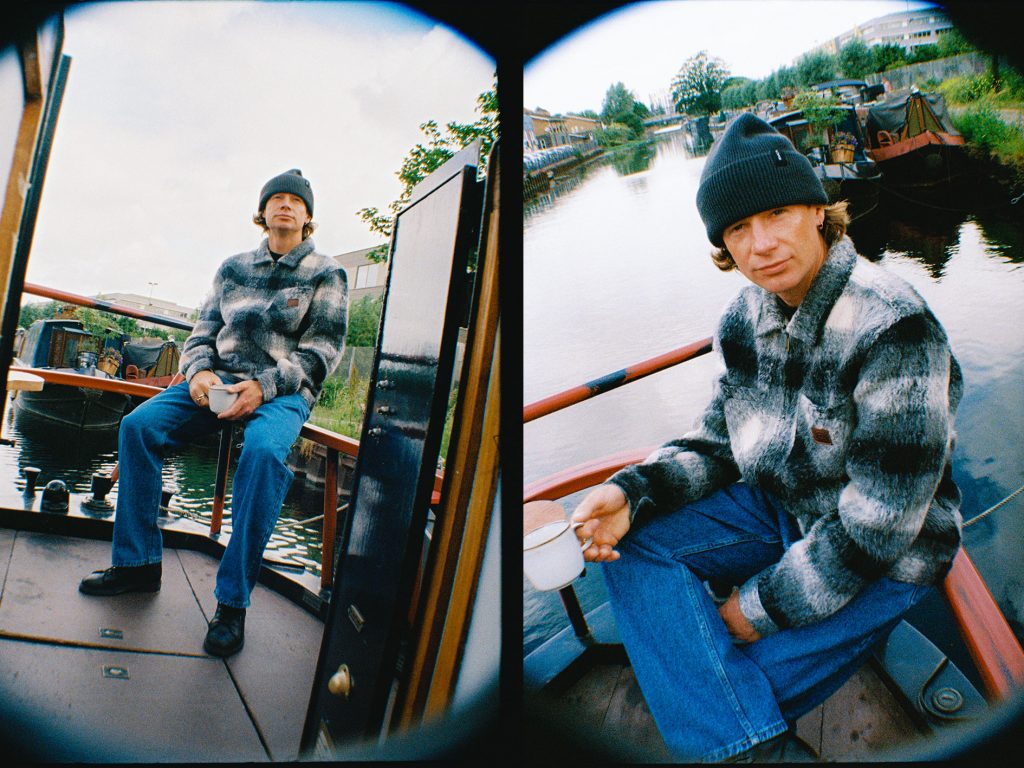
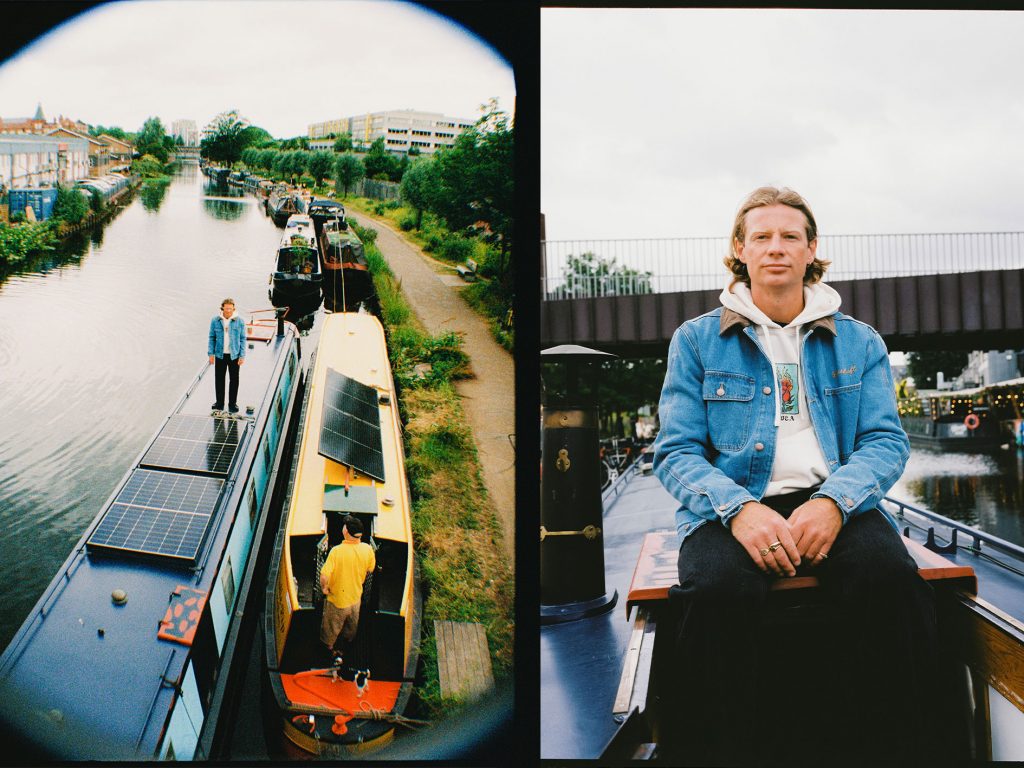
If it weren’t for our old friend Barney Page waving us in from across the towpath, the narrowboat Pride of Sherwood would have been easy to miss! East London’s canals are chock-a-block with floating abodes, one of which Barney now calls home…
It’s been half a decade since we last had the pleasure of spending time with Barney. A trip originally sold to him as a skateboarding mission in Barcelona, turned out to be a hotel campaign in which drinking champagne repeatedly on rooftops took precedence.
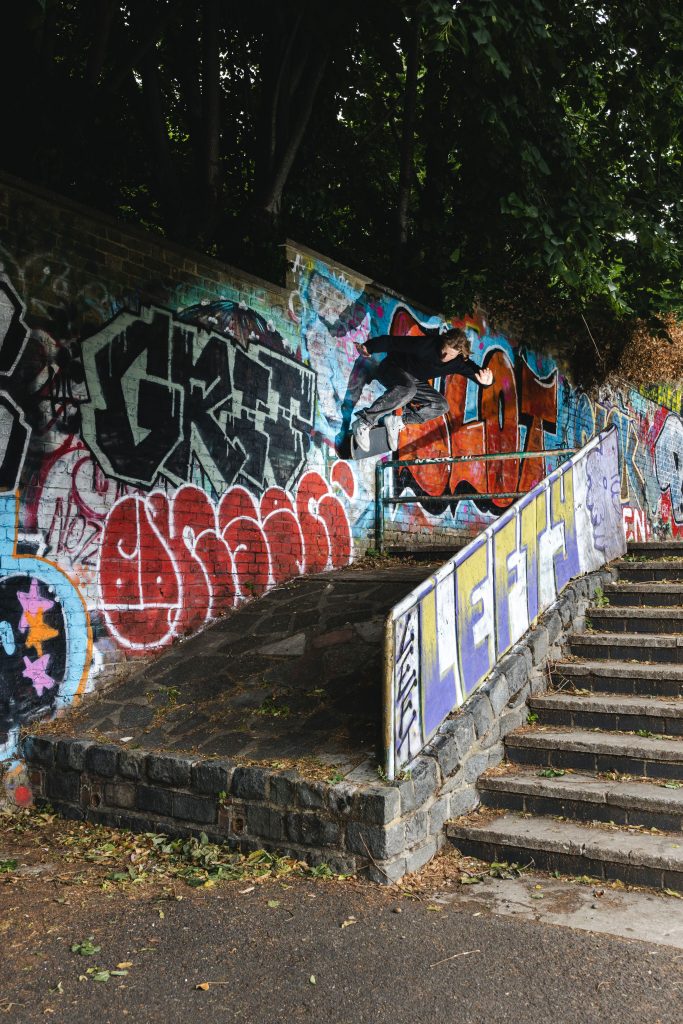
Since then, Barney has rebuilt a boat by hand, navigated England’s canals, and eventually settled at an unconventional address via North Wales. He’s also moved countries more times than we can count, skated the length of Great Britain for charity, and released countless video parts (just to name a few highlights).
Between life as a professional skateboarder and advocating for men’s mental health, Barney has also found solace in jewellery making and being back on British soil, at least for now. So when we found ourselves back in our beloved Blighty’s capital, we made a point of stopping by for a cuppa and took the opportunity while aboard to talk through all of the above. Enter one of the UK’s most legendary skateboarders, Barney Page.
You’ve recently settled in London on a canal boat. Can you tell us how this first came about? And the story behind how and why you first bought a boat?
It kind of happened on a whim, really. A couple of my friends already owned boats, and I’d always romanticised the idea. It just seemed like a really interesting way to live. Being in London, it also made sense financially, even though it comes with its own challenges, like not having a fixed spot, which can make going away a bit complicated.
But I really liked the idea of fixing something up myself and learning as I went. Boats are obviously different from houses, but a lot still translates. There’s a lot of problem-solving—pipework, systems, odd angles, and I enjoyed figuring it all out. I liked the idea of learning new skills and actually accomplishing something on my own.
How did you learn how to build and renovate?
I actually went to woodworking school with my family when I was younger. I did that for about four years, but then I didn’t really pick up tools again for nearly ten years. Still, that foundation helped a lot. I understood basic construction, how to use power tools, that kind of thing.
Beyond that, it was a lot of research. YouTube is king. Anytime I wasn’t sure about something, I’d just search it and usually find an answer. Everyone’s boat layout is different, but you can always adapt what you see to what you’re trying to do.
And now with AI search tools, it’s honestly untouchable. You can ask really specific questions and get solid answers straight away.
Are AI robots building boats for us any time soon?
Maybe… but they say tradies are the safest jobs, right?
Where did you sail from to get the boat to London?
I was looking all over the country for about two months, which was pretty stressful. When you buy a house, you usually narrow it down to one area, but with a boat, it could be anywhere. I’d drive five hours, stand on a boat for ten minutes, and realise it wasn’t the one. It started to get exhausting. Eventually, I found this one in North Wales. I’d never even turned a boat on before, so I was asking people in the marina the most basic questions. It was definitely jumping in the deep end.
The journey to London took about three and a half weeks. It’s only around 270 miles, but boats move slowly, and there are loads of locks. People told me it would take six weeks, but I was moving eight to ten hours a day, every day.
The best part was how much I learned. By the time I arrived, I really understood how the boat worked and how to manoeuvre it. If I’d bought it in London, I wouldn’t have learned half as much. And honestly, it was an epic journey. I went through parts of the country I didn’t even know existed. It was beautiful!
What are the rules around mooring up in London?
You’re generally supposed to move every couple of weeks if you’re continuously cruising. There are permits and fees depending on where you are, but enforcement can be a bit inconsistent.
Do you have a favourite mooring spot so far?
Right now, Hackney Wick. I’m supposed to move every couple of weeks… and I kind of don’t. It’s just too convenient. Hackney Central is close, Victoria Park is right there, Hackney Wick Overground is nearby, and Stratford’s only a 15-minute walk with links to everything, including the airport.
There’s also a massive food scene around here, so everything I need is basically in one zone. I’ve been a bit naughty about staying put, but there’s a whole community doing the same thing.
There’s a retired guy called Jeff who’s become a good mate. He keeps an eye on my boat when I’m away, helps with water, that sort of thing. I’ll sort firewood and split it with him. People moor up next to me all the time, and sometimes you’ll just end up having a cup of tea or a drink together. It quietens down in winter, but it’s a great community. People really look out for each other.
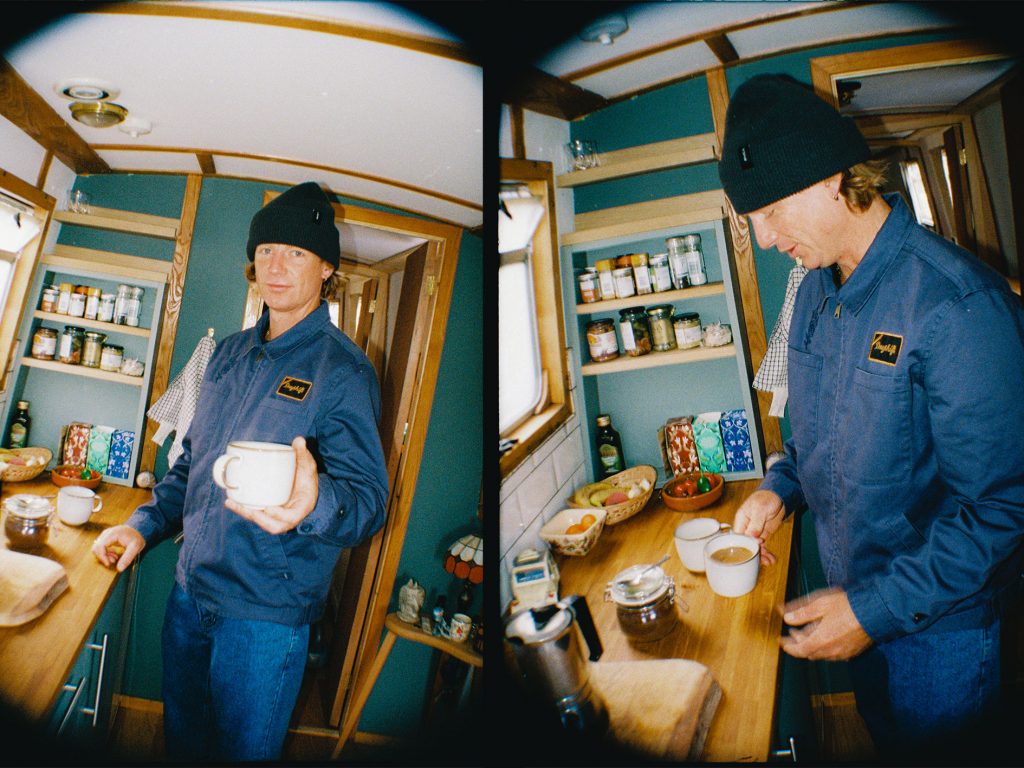
We see your boat’s called the PRIDE OF SHERWOOD. Is there any backstory to the name other than being from a place called Sherwood?
Yeah, that’s just the name it came with. I don’t hate it, but it’s not something I’d have chosen myself. Changing a boat’s name is meant to be bad luck, so I’ve left it. It’s not plastered down the side or anything; it’s mostly just on the paperwork. I once booked into a marina, and they only asked for the boat’s name, not mine. The whole time I was there, they just kept calling me “Robin” (laughs).
Is there a drinking limit aboard a moving canal boat?
There definitely is a limit, but realistically, who’s going to stop someone cruising at two miles an hour? (laughs) It’s more serious on places like the Thames, especially tidal sections where there are checkpoints…
Can canal boats actually handle the currents in the Thames?
It can be sketchy. I did a trip on the tidal Thames, and you definitely feel vulnerable. You have to time it with the tide, and the engine power isn’t massive. Fortunately, I was only on the tidal section for an hour or two before reaching Teddington Lock, where it becomes regulated again. It’s still a big open river after that, but without the tide pulling you around.
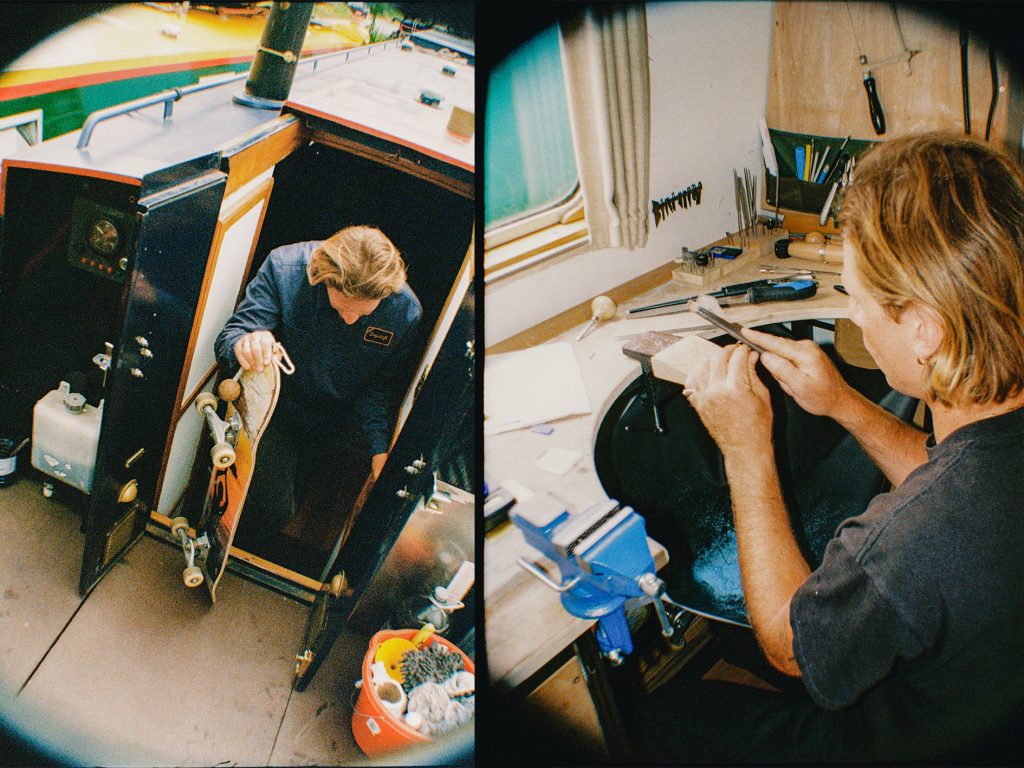
You’ve got your jewellery atelier onboard. How did you get into making jewellery?
It’s mostly a hobby for now. I don’t always have time as I’ve been prioritising renovating the boat, skating, and travelling. But it’s really therapeutic, and I enjoy it a lot.
The dangerous part is how quickly the costs add up. One minute you’re an hour in, the next you’re 5-6 deep. I’ve started making a few pieces with friends, which has been nice. Having a small workshop on the boat makes it easy to do bits and pieces, but for larger machinery, I still need to use proper studios, and I’ve been taking some classes. For now, it’s just a passion project. Who knows where it’ll lead to.
Do you mostly work with silver or gold?
Mostly gold, actually, because my friends have always wanted gold pieces. That was definitely jumping in the deep end (laughs). My first few pieces involved setting diamonds in gold, which is nerve-wracking. If something goes wrong, it’s a big mistake. And with gold prices now, it’s wild. Even 9-carat gold is around £36 a gram. Compare that to sterling silver, which is about £1.20 a gram, where you can afford to fuck up. The problem is you can spend ten hours on a piece, then just melt it down in seconds, and all that time has gone down the drain.
After living in cities overseas like Barcelona, what’s brought you back to London?
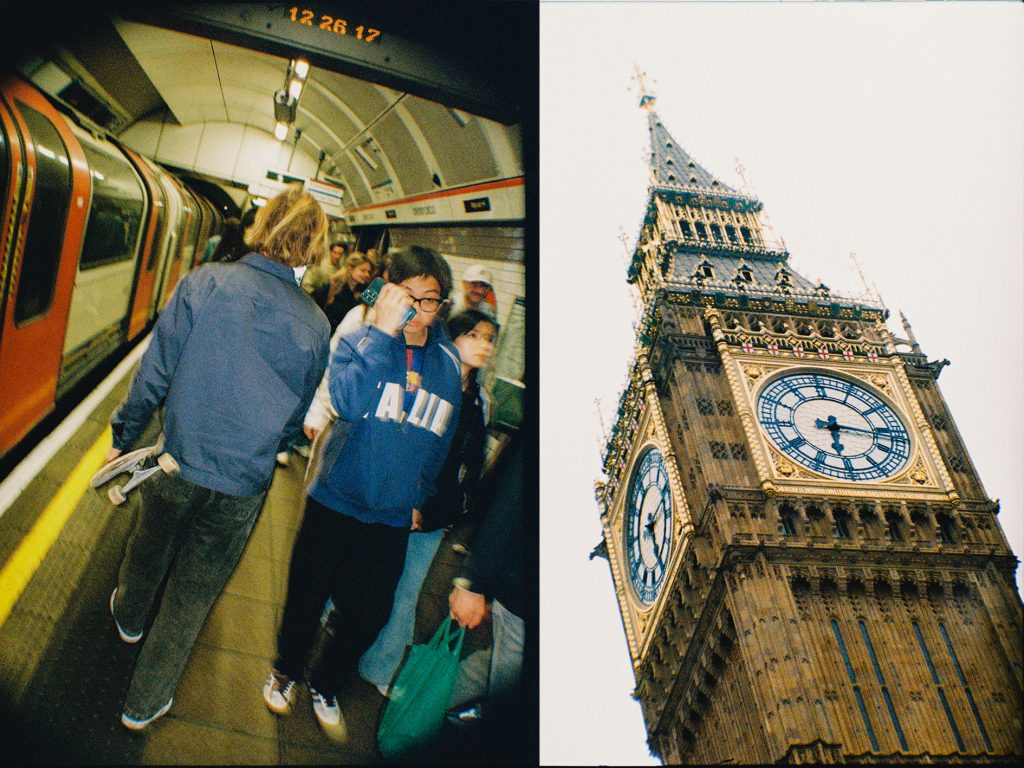
Barcelona started as a short trip and turned into a few years. I don’t really need to be in one place for work, so I move around a lot. But I fancied giving London another go. I love skating here – the spots look incredibly cool on footage, a lot of my friends are here, and my family’s close. It just made sense.
What’s your favourite spot to skate in London right now?
There are some good DIY spots. There’s one up the canal near here called The Bumps, which is super fun, and they’re constantly evolving it. Stockwell’s also amazing since it was resurfaced. And honestly, you can just cruise the city and find perfect ledges, plazas, and street spots everywhere. London’s got everything.
Who’s your go-to crew these days?
It kind of depends on who’s in the city, as people are always travelling. I film a lot with my friends Will and Mike Boardman, they’re twins who film here, and they’re always out with different groups. There are constantly new people passing through, which keeps things fresh.
Coolest addition to London recently?
Skate-related… it definitely has to be the Palace indoor park. London’s winters are brutal—wet streets, freezing temperatures, and having an indoor park with heating is a lifesaver.
Is the phone-snatching problem as bad as it seems on social media?
Yeah, it really is. I know so many people who’ve had their phones stolen. Someone tried to take mine not long after I got back. I was looking for a Lime bike late at night, phone out, and I just felt someone behind me. A guy on a masked electric motocross bike flew past and missed my phone by inches. They target tourists a lot… Oxford Circus, Tottenham Court Road, places like that, but it happens everywhere.
You were recently in Bhutan on a skate trip. What took you all the way out there?
There were two reasons… One was through Nez Jenkins’ charity, Salad Days of Skateboarding, which helps introduce skateboarding to places where it’s still new. Bhutan had a skatepark but no skateboards. So people go out, donate gear, teach kids, and help grow the scene.
The other reason was my friend Patrick Warner, who’s working on his second book and a skate edit in Bhutan. They go about once a year. It’s an incredible place, and a real privilege to visit—it’s not easy to even get a visa.
Are there street spots?
There are street spots too, surprisingly. Anywhere there’s infrastructure, you can find something. The altitude makes skating hard though—around 2,500 metres. You get out of breath fast. But I’d love to go back, it was one of the most incredible places I’ve ever been.
A couple of years ago, you skated the length of England in memory of Ben Raemers to raise money for the Ben Raemers Foundation*, documented by Ryan Sherman. Ryan has also shot the accompanying video for this project—have you two always worked together? How far back does that relationship go?
I met Ryan when I first started spending time in the US. He lived with my TM at the time and worked at the shop. Eventually, he got taken under the wing of the filming crew and became one of the main filmers. We’ve known each other since around 2021, filmed full parts together, and travelled loads. That relationship naturally led to working on projects like the Ben Raemers trip and the boat journey. Even if we weren’t filming, we’d still be doing that stuff together. It’s genuine friendship.
How did he end up filming this Humble Abode video project?
He joined me for the first two weeks of the Wales-to-London journey, which was huge. I’d have been terrified doing it alone at first. Then I finished the rest solo, which was important for learning too. He also helped a lot during the renovation phase afterwards.
Besides this one, what projects do you have coming up?
There’s a Thrasher trip with the boat coming out early next year, plus this RVCA Humble Abode project. I’m also filming locally with friends for a London-based video. Just trying to keep things moving.
And just to finish. What would you say the worst trend in skateboarding is right now?
I don’t want to be a hater. Everyone’s got their own style and reasons for skating. If people are happy doing what they’re doing, let them be.
*The Ben Raemers Foundation is a UK-based charity dedicated to supporting the mental health and well-being of skateboarders and the wider skateboarding community. Learn more at thebenraemersfoundation.com