 Words by Alexei Obolensky & Josh Barrow | Photography by Julien ‘Perly’ Petry
Our first meeting with Alexander Douglas Craig was in the winter of 2024, in the backcountry of Japan’s northernmost island of Hokkaido, to those in the know – the ‘tunnel zone’. An unlikely situation to meet a tall, well-mannered Scot, but one that left an impression.
And here we stand, two years later, degrees of longitude and latitude of separation, but oh, what’s this? Arc’teryx’s new film Between Days has just hit the WT intray of ‘things to review’ and is directed by Alexander Douglas Craig. Lasting impressions, circles spinning ever closer, and so on. A brief synopsis of sorts is as follows.
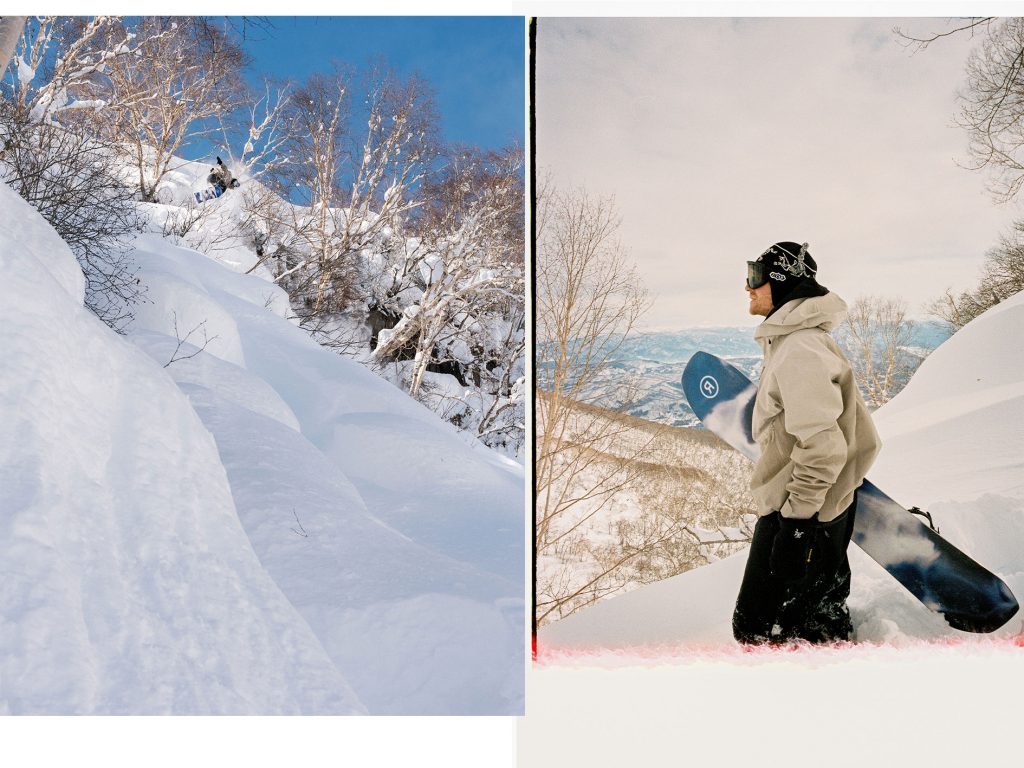
Between Days is a story centered on nine snowboarders from four countries who find themselves in the Japanese Alps amid a season-defining winter storm cycle. Blending riding with moments of camaraderie, and cultural connection through legendary snowboarder Tadashi Fuse, as both a guide and cultural touchstone. Fuse embodies a deep love for the mountains and a unique philosophy towards riding them. One that underlines the whole point of in-between days, placing emphasis on joy, simplicity, and connection to place and time.
With the film firmly parked in the “positive review” out tray of our shit show of an office, and one that is now released on the World Wide Web after a stellar premiere tour, there seemed to be no better time to pick up the phone and talk two wheel drive in blizzards, trial by fire, the beauty of nudity, and more behind the lens of a stellar cinematographic feat.
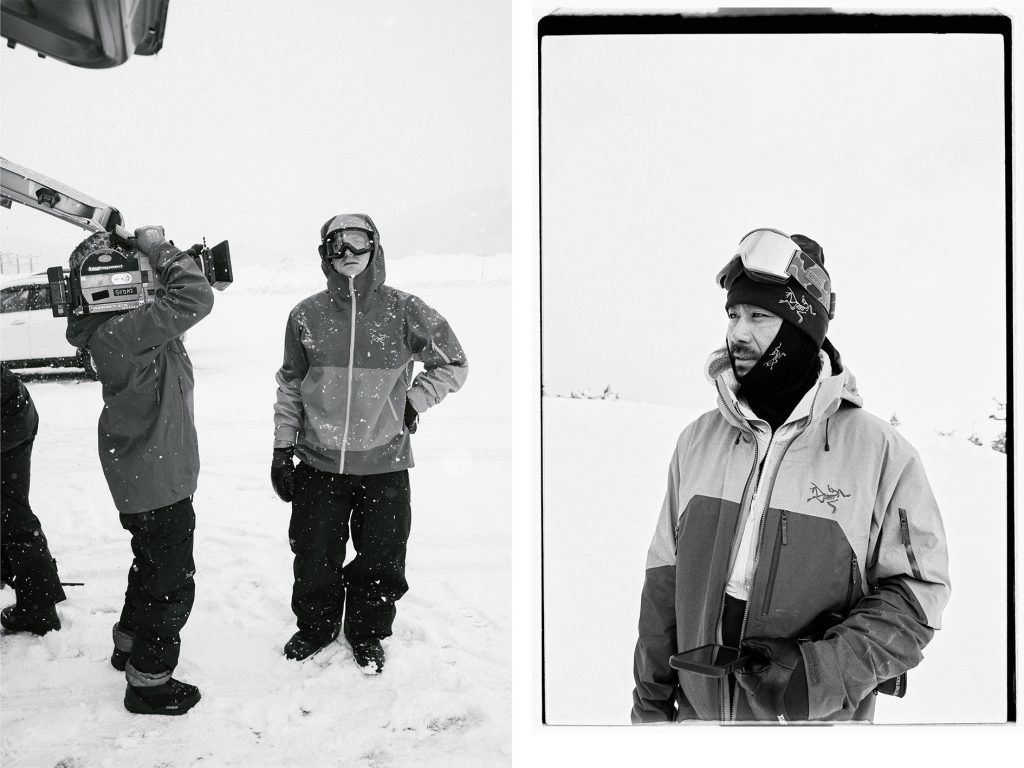
Unless we’re mistaken, this is your first big directing gig with Arc’teryx. How did this project first come about?
My friend Robin Van Gyn asked if I was interested in making a snowboard film for Arc’teryx (she’s the team captain). There was talk of Japan, and perhaps trying to make something a little bit more in the documentary realm. I said let’s do it. I also really wanted an Arc’teryx jacket…
You have a strong background in skateboarding. While there are similarities in assembling longer-format pieces, such as sections that are location- or profile-based, what are the biggest differences between the two disciplines?
Skateboarding was my first love growing up and pretty much how I got into filmmaking, so I’ve definitely done my fair share of skateboard projects over the years. Not so much these days. I suppose the traditions are the same for both. They tend to follow a similar format. As for differences? I’m sure there’s plenty. You need to wake up way earlier to make a snowboard video, so that can be a challenge. Definitely more goretex™ in snowboarding, and you don’t see a lot of merino base layers in skateboarding. I think you need to have a reasonable level of fitness if you want to make snowboard films. I need to work on that. There seems to be a lot of walking up steep hills in deep snow, and I’m not getting any younger. That’s why I had Leo Hoorne and Chris Clark come help. They’re sprightly young whippersnappers.

The film has a consistent feel throughout with the use of black and white. What made you run this film entirely in monochrome? Is it a nod to the French film La Haine, which we heard is your favourite?
Haha, La Haine is for sure one of my favourite movies, but that’s not why. There were a couple of reasons. Mainly, I liked the idea of stripping away some of the visual information to simplify the image. To commit to a minimalist aesthetic and draw more attention to the light, shadow, and movement, which I think works really well in the snow. Also, I’ve shot in Japan before, and it’s often really foggy and flatlit in the winter, especially in the forests. With black and white, you have more latitude to play with the contrast, and I wanted to push that. The idea was to keep the whole thing very simple, though. Especially the cinematography. I’m a little bit allergic to gimmicky shots and effects. If there was a nod to any movie, it would be Akira Kurosawa’s Throne of Blood, and that was made in 1957, which says a lot. How he shot the fog and the wind in the trees – stunning. It has a supernatural quality.
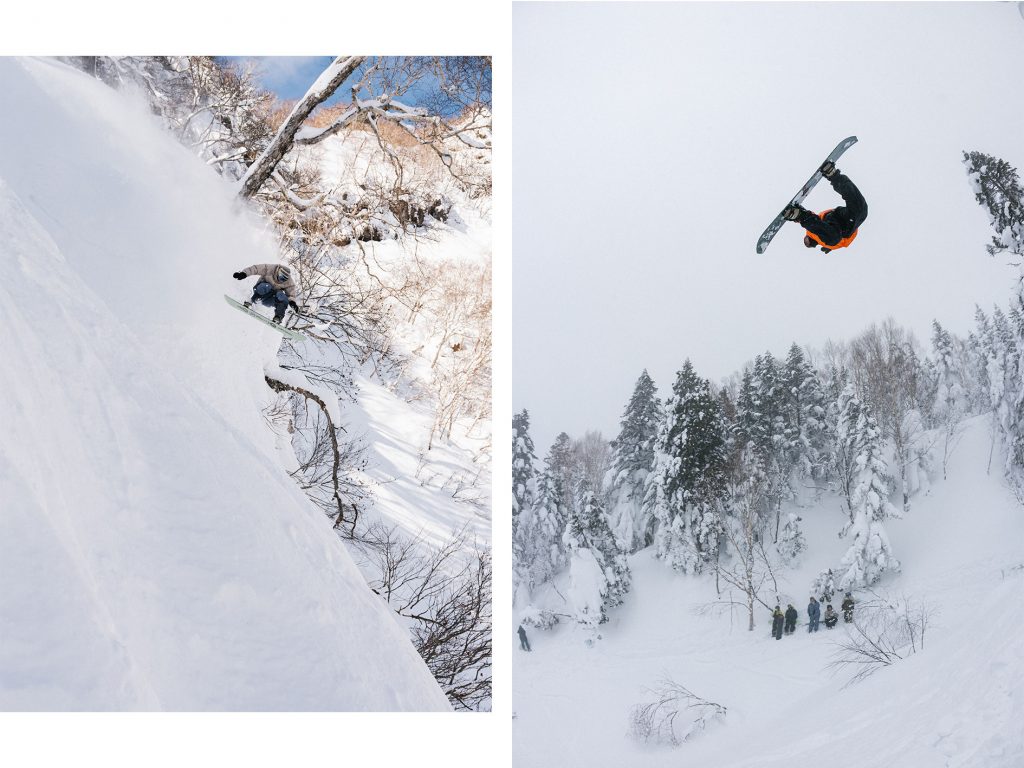
Was the cast selection your choice, a natural happening, or a list provided to you by the brand?
The idea from the start was that the whole Arc’teryx team would be involved in the project. That was something they were really keen on. I believe it was the first time all of the team had been on a trip together. And we were hoping that Tadashi would be available as much as possible while we were there… He was our spirit guide.
You have quite an eclectic music selection in the film. How do you go about selecting and placing different songs during the editing phase? Do you have a system in place?
Yeah, I’m quite particular when it comes to the music side of things and sound design. I often make up a playlist before we go shoot, to imbue a feeling or have a cadence in my mind while we are out gathering all the elements. I like to record sound as well. Little samples or textures, anything really. Even if I don’t end up using them, it’s fun. So I built a lot of the sequences around specific music cues or sound textures.
For this project, I really wanted it to have a dreamy, mesmeric quality. The first time I was in Japan, I felt like I was lost inside an endless blizzard the entire time. I wanted to try to recreate that feeling. Our sound designer, Rob Beuchel, did an incredible job of enhancing all this. Also, shout out to Ishmael Butler from Shabazz Palaces, Odd Nosdam, Dave Biddle, and Susan Deiterich, aka The Space Lady, for granting us permission to use their wonderful music.
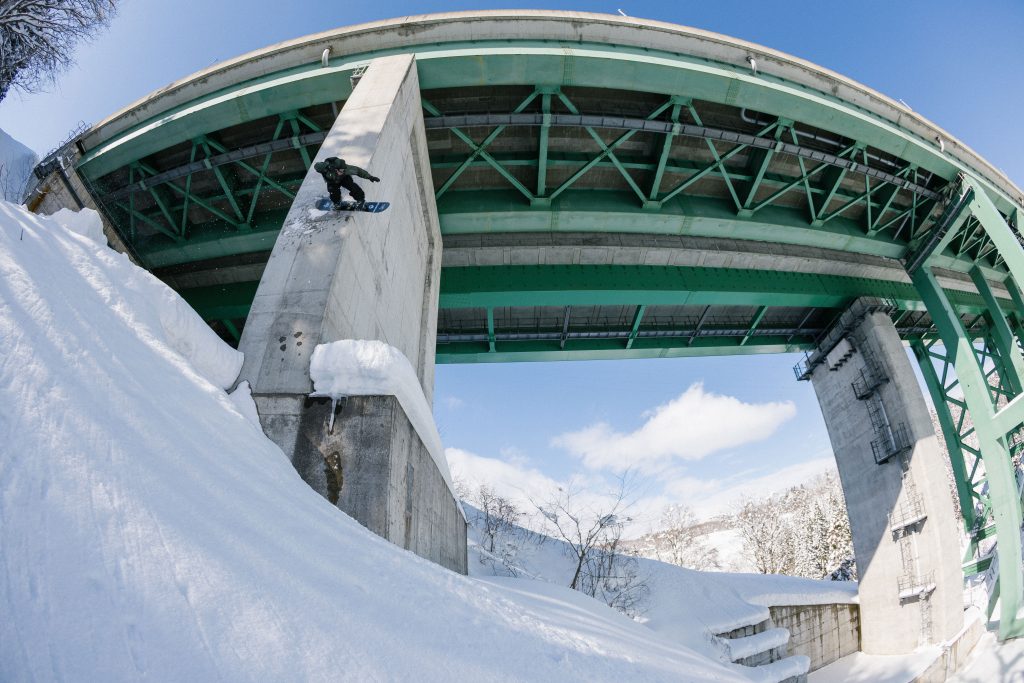
Besides the obvious preferable snow conditions in Japan, what made you choose the country as the backdrop for this project?
Japan had already been chosen by Arc’teryx and the team. Great choice.
Do you have a favorite sequence in the film that you’re particularly proud of, and why?
Hmm, not sure. Perhaps the lil’ opening beat with Tadashi, Victor, and Spencer set to The Space Lady’s cover of Fly like an Eagle. It’s like a little dance.
What’s your take on rear-wheel-drive minivans in the snow? Would you recommend renting one in Japan?
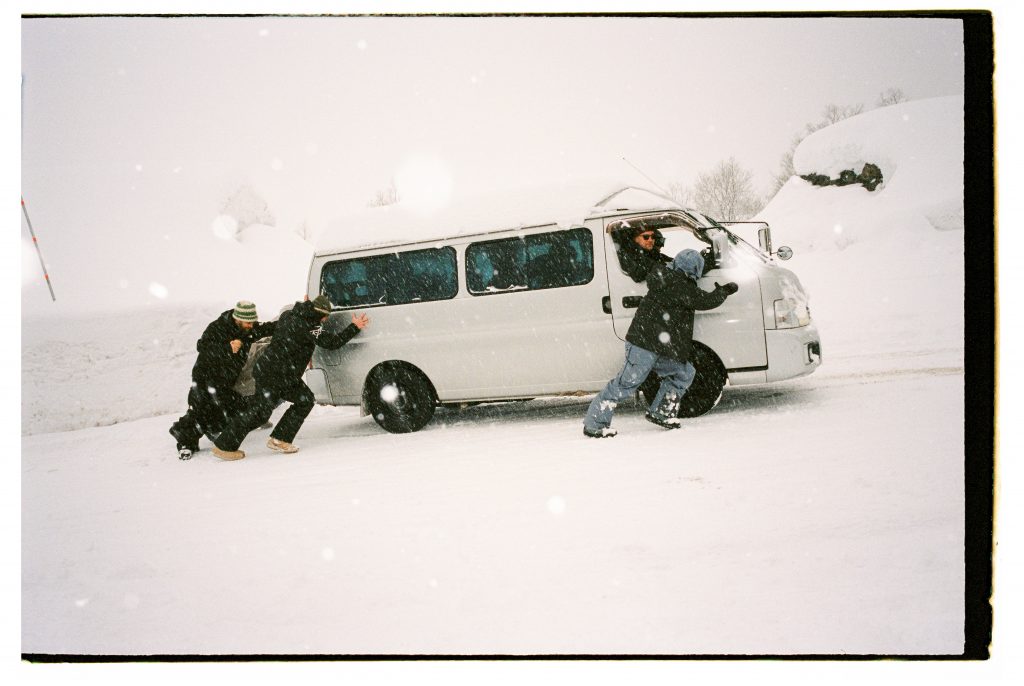
I mean, they’re not the most practical choice in the snow, but it sure makes for exciting journeys. Pretty much a 50-50 chance of either getting stuck or sliding off the road every time you get in the thing. We had a couple of hairy moments. Jared probably had the worst experience. He was up till 3am one night trying to dig himself out of a ditch, and just ended up leaving it there. Shin probably took the rap for the two-wheel drive vans, but I have to take some responsibility for the decision. There was a reason… It just wasn’t a very good one. I’m sorry for any pain, confusion, or hurt I may have caused.
Can you walk us through your onsen ritual, step by step?
Mine is quite simple. Get naked. Hose yourself down on a small plastic stool. Spend 10 minutes submerged in the onsen or sauna, as hot as you can tolerate. Then, cold plunge for around a minute. Then lay down and rest the heart. Repeat this cycle three times, and you will be reborn. Not sure I’d last more than one day on the hill with these cats if it weren’t for the onsen.
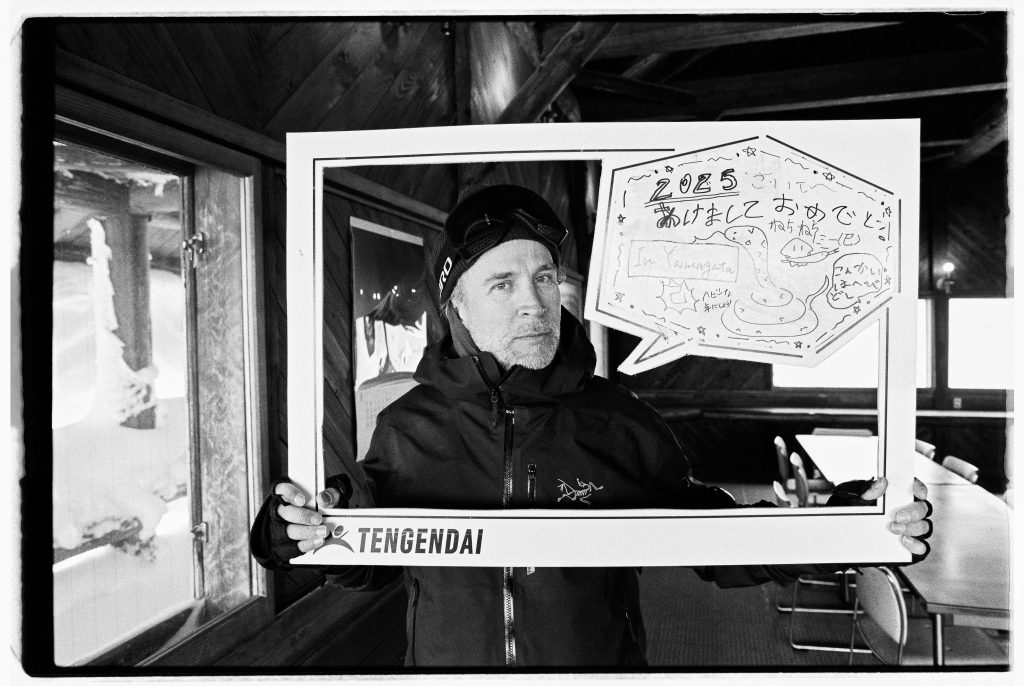
Snowboarding beautifully brings people from very different walks of life. How do you find that Japanese riders approach trips differently from Americans and Europeans when you see them on these missions together?
In my experience, the nuances between people of different cultures are all pretty muted when everyone shares a similar passion. Subculture has a nice way of doing that. And all the in-between stuff is where the magic lies. That said… The Japanese are clearly the coolest. Americans the loudest. And Europeans the funniest.
Arc’teryx is also really good at keeping their roster busy together. Is that something you noticed, a good bond, on this project compared to working with other teams?
I don’t really do much of this kind of thing, so I’m not sure I can compare it to other teams. But everyone was super cool. We were rolling 17 people deep at one stage. Not an easy gaggle of humans to coordinate, but everyone was on point and down to get to work. I imagine just going on the quest to try and shoot in these environments and how absurd it all is, breeds a real camaraderie between people. No matter what team you’re on. It’s a beautiful thing. We are very fortunate to get to do this, and to share those experiences in such phenomenal locations can only be considered a privilege. In the truest sense of the word. The only complaining I heard on the trip was from inside my own head every time I had to hike up a hill with the damn tripod. And from Perly, whenever splitboarding was mentioned.
Who was the MVP of the project for you whilst filming Between Days?
Tadashi’s girlfriend, Kana. We would have been lost without her kind help in all things logistics and translating. Thank you, Kana.
Honestly, though – everyone involved gets MVP status. Most Valuable People. It was a real treat to get to do something like this, and everyone brought their own special flavour to the mix.
What’s the story behind the Dosojin Fire Festival in the closing credits of the film, and have you ever attended one before?
This was my first time attending. It’s been going on for a few hundred years, I believe. It’s part of Nozawa Onsen’s Shinto traditions. My understanding is that it’s a ritual where the unlucky men of the village (which is anyone aged either 25 or 42) build a giant wooden shrine to honour Dosojin. He’s like the deity of fertility and health. Then all the unlucky men get tied to the shrine while the rest of the villagers terrorize them with giant bundles of fire sticks. They literally beat the shit out of them with fire for hours and hours until they are purified and the shrine goes up in flames. Then they repeat it again the following year with the next batch of unlucky men. And so on and so on. I hope it works.
Can you tell us what you have in the pipeline for this coming season (25/26)?
No real plans for any snowboard films. I think I’ve made four now. That’s three more than I ever thought I’d do in my life. I’d like to go back to Japan again if I can swing it. Mainly for the onsens. Otherwise, I’ll see what comes along. I’m working on some scripts and some narrative projects and figuring out what makes sense to do next.