Interview by Josh Barrow & Robin Pailler | Photography by Josh Barrow, Ian Kingsnorth & Steve Tanner
Mark Jenkin’s films have long attracted a loyal arthouse following, but his name reached a broader audience with Bait, the 2019 feature that paired a rigorous analogue production with a sharp critique of gentrification and tourism. The film drew international attention and won the BAFTA for Outstanding Debut at the 2020 Film Awards.
More than a director, Jenkin writes, shoots, edits, and composes his films, shaping an aesthetic that feels both archival and immediate. Grainy frames, hand-processed textures, abrupt cuts, and stretches of charged silence form a visual and sonic signature inseparable from the Cornish landscapes that define his work.
We have long been admirers of Jenkin’s films, but it’s his upcoming feature, Rose of Nevada, which really caught our eye. In part for its striking ensemble cast and crazy premier circuit, and also out of curiosity about where his forever-evolving form has steered him this time.
What can we say following a private viewing without giving away too much? Rose of Nevada follows two fishermen who sign on to a trawler that vanished thirty years ago and has now drifted mysteriously back into port, as if nothing ever happened. Their first voyage is uneventful until they step ashore and realise they’ve somehow landed in 1993, immediately mistaken for the long-lost crew. What follows is a playful tangle of time slips, mistaken identities, and coastal folklore, as past and present collide in a village that never quite let go of its ghosts.
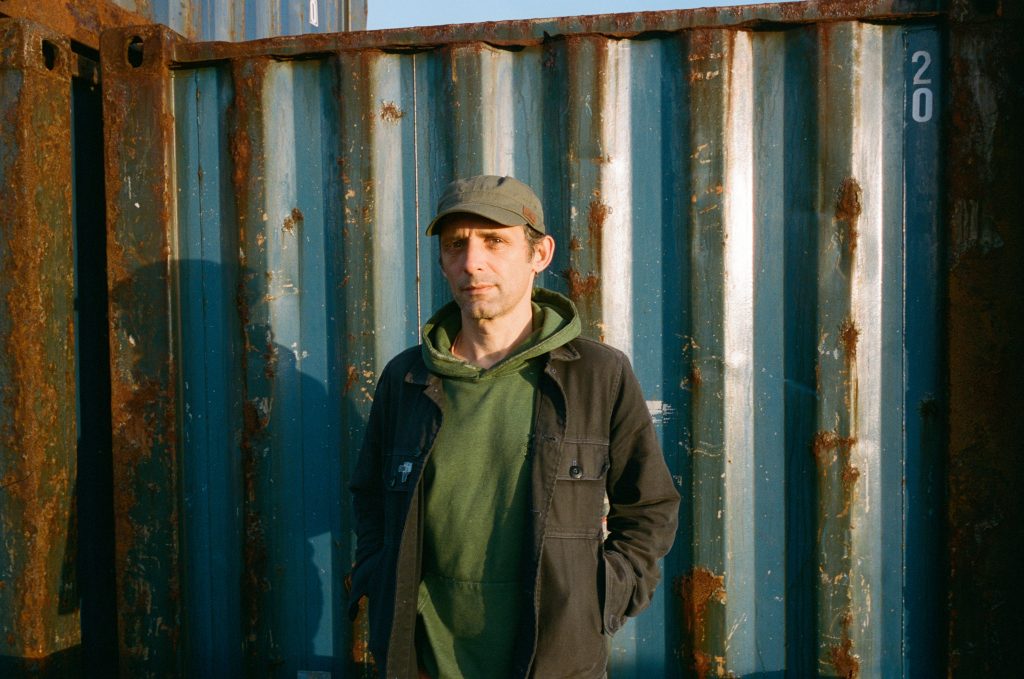
Fresh off the Venice Film Festival, our first meeting with the fellow Cornishman takes place face-to-face and close to home. Mark walks us through Penzance, a coastal terminus just a stone’s throw from the village where he lives and works. It’s here that we begin to unpick how a filmmaker with such a handmade, defiantly analogue approach has quietly reshaped British independent cinema.
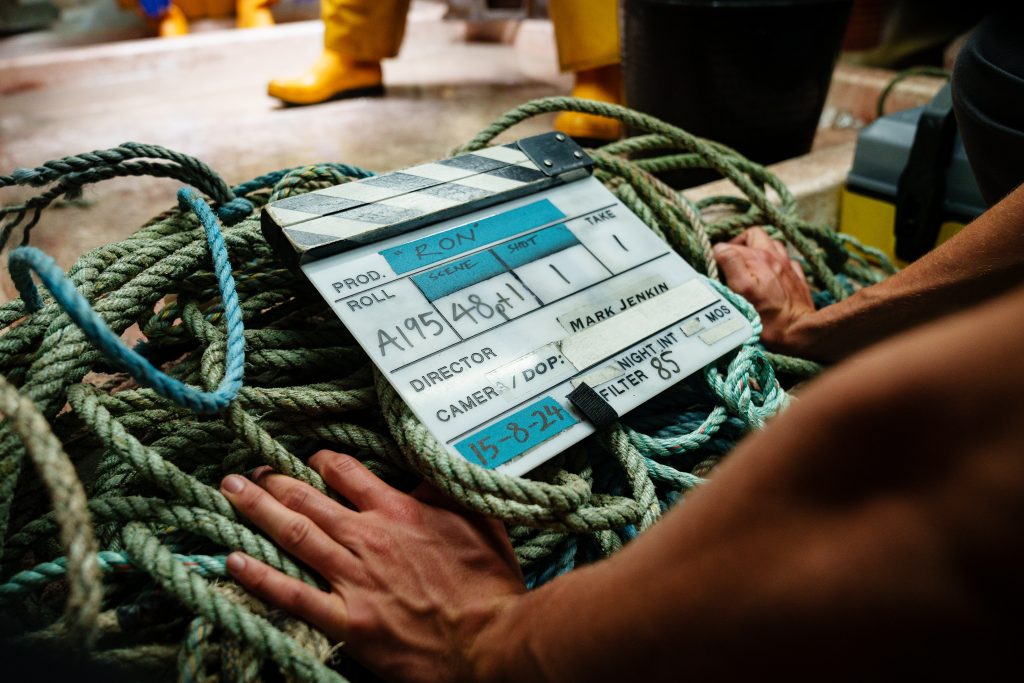
It’s been three years since your last feature, Enys Men. After completing a major project and spending time on smaller ones, how do you know you’re ready to take on another large-scale film like Rose of Nevada?
I’m always ready to go straight away, but I know that nothing ever happens quickly because you have to raise the finance for these films. We knew this film would be bigger, given the bigger stars (George Mackay and Callum Turner), which brings a certain expectation about how commercial it will be. That, in turn, puts more pressure on us to sort the terms of working with money… more collaborators, more resources. I knew while I was editing Enys Men that we had a script for this new film, and I was kind of raring to go, but there was always a massive delay. But I’m always ready to go.
Whilst Rose of Nevada retains all the traits of your previous two features, it feels incredibly well-polished. From the film processing, the grading, but especially the audio, most notably the non-diegetic sound, which is almost too perfect. When Bait was released, you spoke very fondly about the imperfections. So, is it a case that you’ve fallen out of love with that raw, imperfect quality, or is it just a natural progression of wanting to be “more professional” for lack of a better term?
I think it must be a natural progression because I don’t think; I just follow my gut with it. It’d be interesting for me to watch Bait again, actually, having just finished this film, as the last bit of the process is sitting in the sound studio, doing the sound mix. So it’s still very fresh to me. For me, Rose Of Nevada will still sound rough as rats, because I post-sync everything. There’s no subtlety in my sound design. Like the quiet moments are absolutely uncomfortably silent. To the point where I had a moment during the Venice premiere when it was so silent I thought the projection had screwed up. You don’t hear that kind of silence in films. But, in contrast, the loud stuff is incredibly loud. Like the fishing sequences were deliberately almost impossible to listen to. I don’t know, it’s an interesting point. I definitely haven’t fallen out of love with anything. Maybe it’s a more polished sound. I mean, it’s still mixed in an old-fashioned way, so that everything comes out of the front speakers. There’s nothing in the side or the back speakers, as the majority of films would use. The dialog is all added afterwards. All of the sound effects are added afterwards. The score is created by me using tape machines again. Maybe I’ve just got better at it?
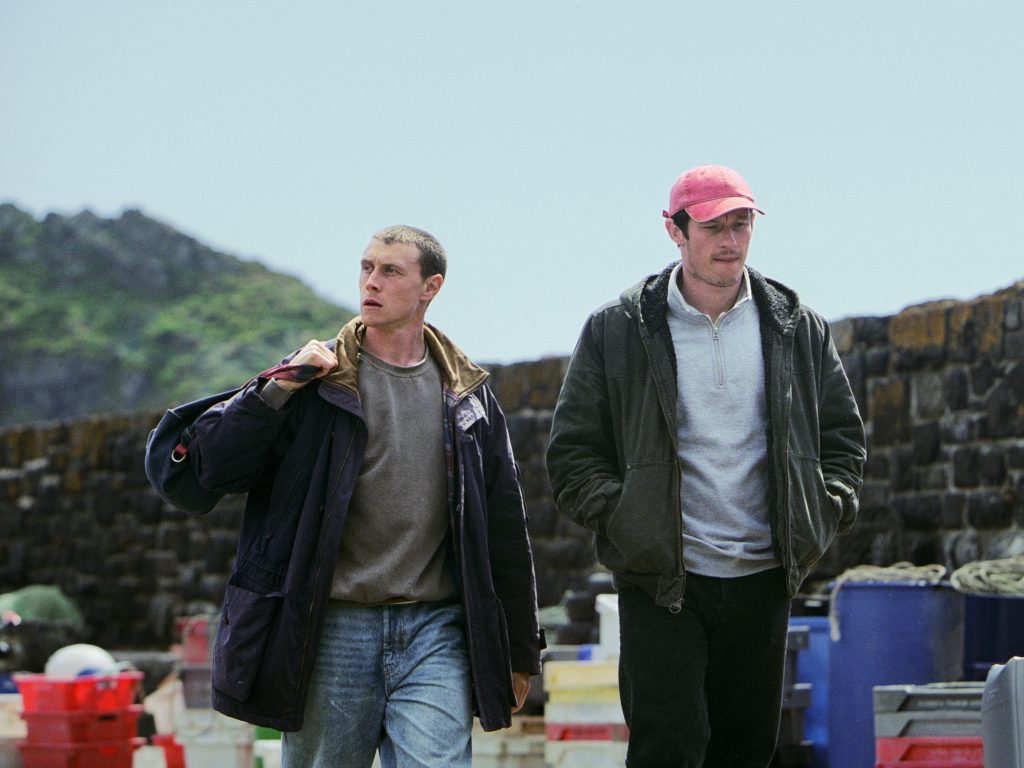
Each one of your features feels meticulous in its execution, even when it comes to its imperfections. What is your pre-production schedule? Do you storyboard the entire film? And how often do you run test shoots beforehand?
We always do test shoots, and that’s for technical reasons, because we’re working with cameras that are 50 years old, at least. So we always do technical camera tests, not necessarily creative ones.
I haven’t got the need to have storyboards drawn, because I’m not communicating what I see in my head to a third party. I don’t work with a cinematographer. I’m my own cinematographer. Quite often, I’ll do floor plans when it’s a complicated sequence. We’ve got more action sequences in this film with speeding vehicles and stunts with a character who falls through a roof. We’ve got scenes at sea with the fishing boat, and also a storm sequence where the boat almost sinks. So that stuff, I would be really meticulous, because they’re expensive set pieces.
If it’s just me and a couple of actors on the quay side in the harbour, then I probably wouldn’t plan it too much. The actors would be really well prepared, because they’d know their dialogue, they’d know their motivations, they’d know what they were doing, but everything else would be left a little bit up to chance. For example, maybe I hadn’t been to that location at the same time of day we were shooting, so the sun might be in a different position, which could make the whole place look completely different. Or if the sun’s in one position, it might mean that the angle I was going to shoot isn’t available because I’ll be shooting into the sun, so I have to shoot the other way. And if I’m shooting the other way, there might be something incongruous in the background that I can’t show, which means I have to go in really tight and close up. So I try not to plan too much, because I don’t want to fall in love with ideas in my head that then can’t be realised for sure.
Did you have to run a water housing for the boat sequences?
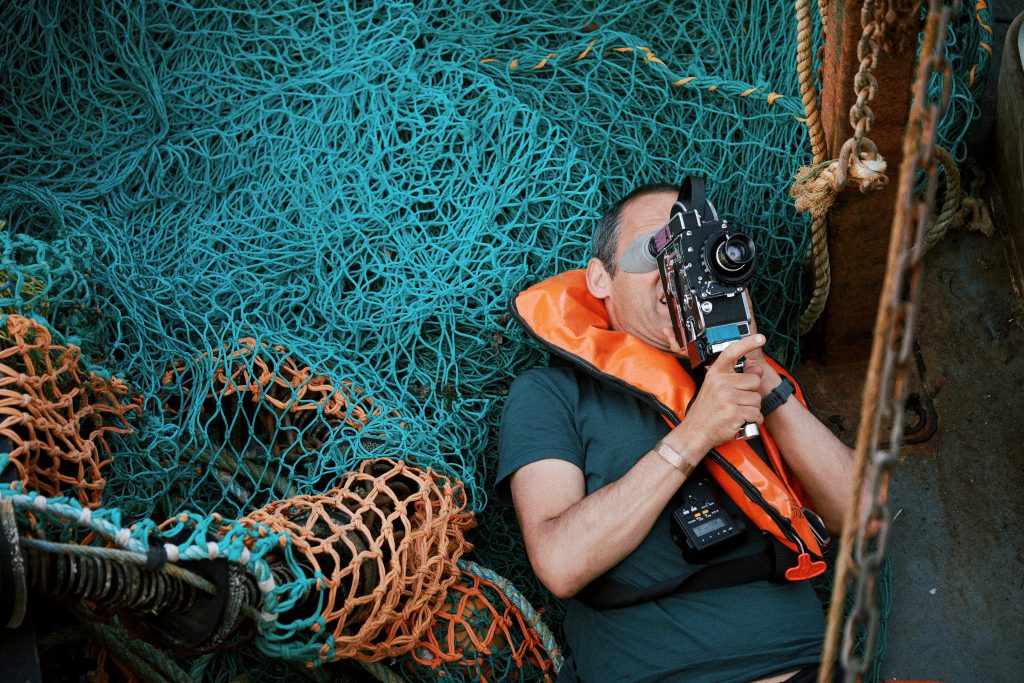
My camera was wrapped in a thick Sainsbury’s plastic bag, one of those ones that will probably take about 5000 years to biodegrade. Then a friend of mine, James Holcombe, who runs a film lab up in Somerset, had a 50-year-old underwater housing. The kind of stuff that Bruce Brown would have been using. It’s just basically like a metal ball with big locks on that you put the camera in. It’s got no viewfinder. You can wind the camera, and then you just point it so you shoot with a very wide-angle lens. He was there for two nights, just in the water, shooting the stuff from within the sea, looking back at the boat. However, I didn’t want too much of that, because I didn’t want the perspective to leave the boat much. Once you’re on the boat, you kind of stay on the boat.
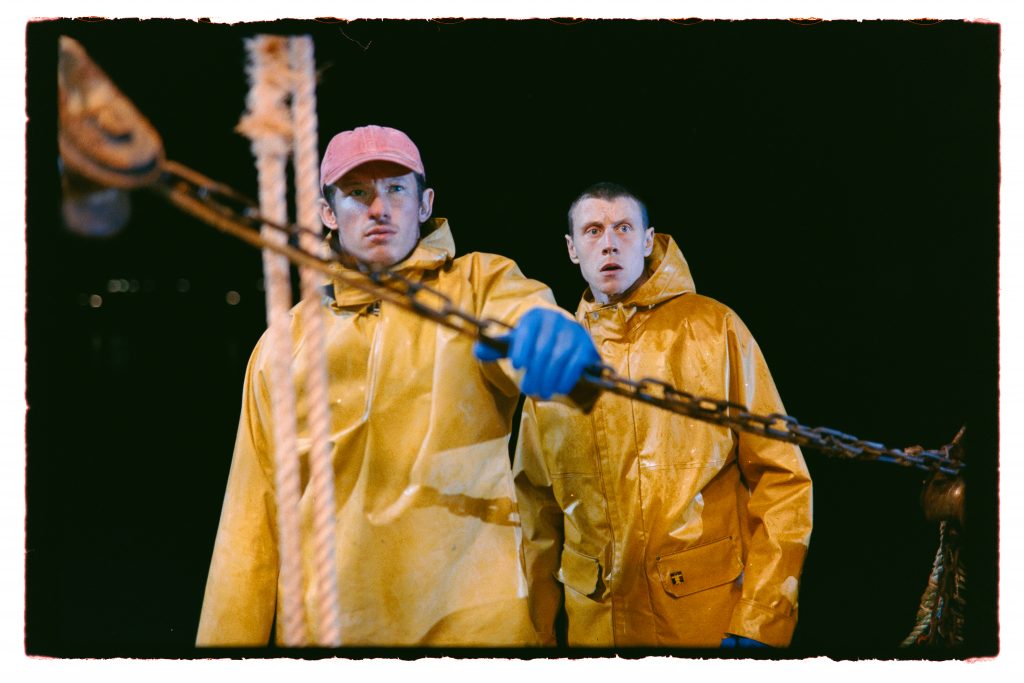
There are a lot of night sequences seen throughout the film. Sometimes a lot of different things going on – is metering in such situations stressful, and did you have to reshoot anything?
No, we didn’t have to reshoot anything. But yes, metering is terrifying all the time. And it’s not just the metering, it’s the whole process of shooting something and not being able to play it back. It makes you incredibly focused on what you’re doing. So I would metre stuff 15 times, over and over again, and then I’ll get my assistant with his light metre to measure everything. And then we’ll sort of agree. Then at four o’clock in the morning, I’ll still be awake in bed, going, is it gonna come out? You know, even down to things like, I don’t even know if I put film in the camera. All of that kind of shit that nobody else sees when I’m shooting. It’s just me looking in the viewfinder. You know some things are underexposed, and some things are overexposed, and occasionally you hit an absolute sweet spot. But shooting with film, you’ve got such amazing latitude because it’s analogue and it’s amorphous, whereas digital, if the ones and zeros are corrupted, you’ve got nothing.
A lot of the time, people go, I love that bit in the film and you go, well, that’s the bit that is imperfect. But also, some of that out-of-focus stuff, I can put a sound on that in the sound design, which would distract the eye by going for the ear, and suddenly that out-of-focus shot isn’t out of focus anymore. You don’t notice it. And so those things in the post-production are sometimes the best moments.
The 4:3 aspect ratio is obviously the natural format for 16mm and fits perfectly with your use of close-ups. What is it about the 4:3 format you love, and why have you never been tempted to move to Super 16mm or a wider aspect ratio for your feature films?
I actually just bought a new Bolex converted to Super 16. I’m shooting a road movie next, so I’m thinking maybe it will be Super 16. I generally don’t really like the 16:9 ratio, and that’s why I’d always stayed away, but Super 16 isn’t actually 16:9, It’s technically 15:9, and so my pedantic head was like, oh, in that case, I will shoot it… as long as it’s not 16:9. I don’t want it to fit to the TV aesthetic. I just love the academy ratio. You know, most films in the history of movies were shot in that ratio. It encourages you to shoot big portraits of people’s faces, which I think are the greatest production values that I work with. I love it, and I know it drives some people mad. Even getting distribution, especially on streamers, is a real turn-off. And some, some streamers just won’t accept it. But I love it.
Your films often have an almost folklore horror quality to them. What is it about that genre that inspires you and your work?
I mean, I said this film wasn’t going to be a sort of folklore-centered film, and then I sat there at Venice Film Festival with 1700 people and watched it.
“I’ve done it again”.
Sometimes you don’t realise what you’ve done until you watch it with an audience. It’s part of my DNA. And I think that’s why some people like my films. Some people don’t like my films, but I don’t think I have a reputation for making inauthentic ones. I’ve sort of got a reputation for making sometimes difficult films, and alienating films, and some people say they’re boring films or whatever, but I don’t think anybody could accuse them of being inauthentic.
What I love about cinema is the way it can play with time. You can mix up the past, present, and future really beautifully with film language. Inevitably, I end up looking backwards and evoking the past. I think my films automatically feel old because of their form. And I’m also making films about a real ancient land that’s got a history. I’m sort of fascinated by Cornwall. Why? Well, people who are Cornish; it seeps into them so deeply, and because you’ve got factual history, but you also have this kind of spiritual, traditional, mythical history that goes with it, which is endlessly fascinating. We’ve just got all of these sorts of myths, folklore, that I can cherry-pick and combine with other bits, which creates this very rich texture for the films to sit within.
And despite those “horror” conventions, your films also retain a sort of modern political commentary on the state of British society, particularly pertaining to the working class and Cornwall, especially. Is that a conscious decision, and if so, how do you balance that with the narrative structure and what you want your films to say?
Again, it’s not something I think about, but it’s definitely something that’s in there. You know, I read the reviews that came out after the premiere, and so many people said it was a political film. I thought I was making a time travel film? But something that was really important to me in the design was the food bank in the village, which is sort of shown without question, because that’s been normalised as part of our society, even as the sixth richest economy on the planet. We have food banks for some reason, and that’s normalised. And then when you jump back 30 years, it’s a post office which is like the prime sort of example of community; a sort of utilitarian service where you could be anywhere in the country, you can go in and pay the same amount of money to post something, whether you’re posting it next door or you’re posting it to the highlands of Scotland. It was really important for me to have that in there, but I wasn’t thinking it was a political statement, consciously.
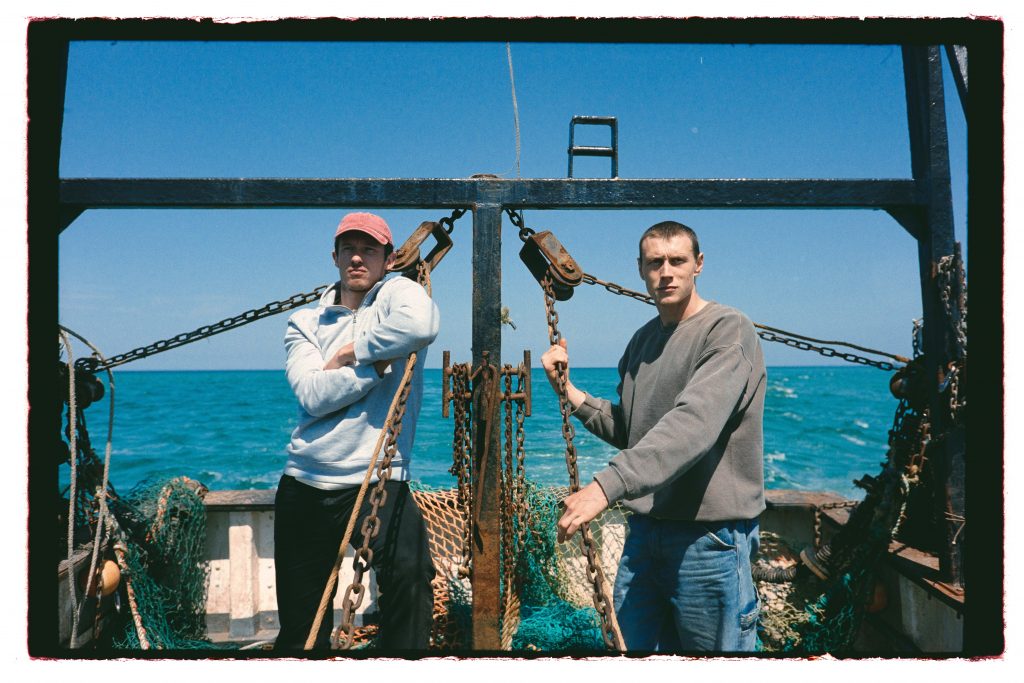
In the film, the main characters arrive back after a voyage to find things changed, in a time that is not their own. How difficult was it to source props such as old money, cars etc.?
First off, all credit to our production designer, Felicity Hickson, and her team. It was a big art department, because although it’s only 1993, it’s technically a period film. Cornwall in 1993 still looked like the mid-80s, as we’re always behind. So there’s a slight offset. I had these images that everybody would be wearing certain clothes. The money is interesting because a lot of people have been quite nostalgic. Some of the props were mine… like my tape collection of music from that period that I was listening to. I’ve got old photos of Newlyn Harbour that they put in frames and hung on the pub wall. We had an amazing Skipper, the owner of the boat, who provided a lot of stuff too. They were really key props for me.
We also had a studio, a big warehouse where we shot a lot of stuff. All the below-deck sequences were shot in the studio, so we built the boat in the studio on a rocking gimbal, and one half of the warehouse was just full of props, and you know, probably 80% of which don’t turn up in the film.
How long does a film like this actually take to make? Do you try and do it all in one go or stagger the shooting of scenes over longer periods? And how long does the editing phase take, especially knowing that you do the entire score?
Okay, so to break it down, I probably started writing it during the pandemic because I needed to do something, and I think we only officially shot draft three of the screenplay. There would have been lots of other drafts in between, but officially, it was draft three.
It probably took two and a half years to write… but not full-time. Then we had two months of proper pre-production in one single block, and then the editing, I would have started cutting in September 2024. I think the picture lock was by the end of February 2025, and then it was completely finished by May 2025. So about eight months of post-production, which I think is really quick considering how much we have to do in post. All of the cast have to come back in and do all of their dialogue, amongst other things, so it felt quick.
I think the work benefits from everything being done with a mad adrenaline rush, because that’s what the shoots are like for me. That craziness and energy are in the footage, and I think if you can carry that through post, there’ll be an energy in the edit and the sound design that an audience will unconsciously recognise.
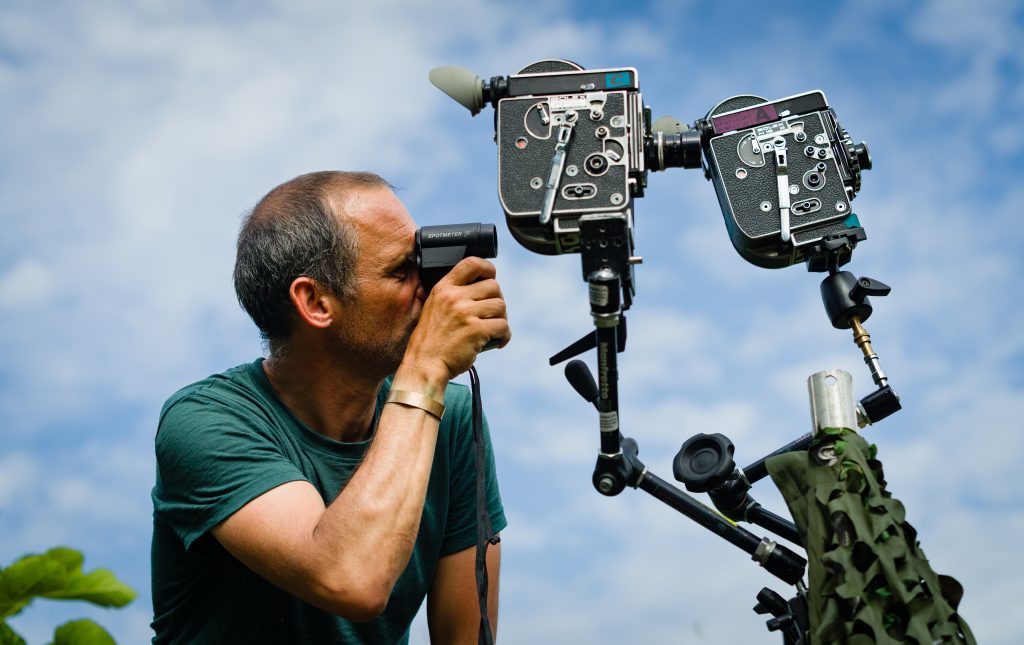
You’ve reused a lot of the same actors in your work, which helps set the tone for your films, especially some of them being Cornish. So, how did the casting of such big lead actors for Rose of Nevada with George Mackay and Callum Turner come about?
There are some quite cynical sorts of budgeting things that you do. You need names to sell movies from a financial point of view. You also want the right people for the film. Quite often, those two things are com- pletely aligned: the bigger the actor, the more appro- priate they are to play the roles that you’ve written. So we knew that we’d be working with an A-list cast this time.
I don’t get them to read the script for me. They read the script in their own time to see whether they like the characters or the project, and whether they think they can do it. But I don’t get them to audition by reading the script. I just met up, and we hung out.
George was suggested quite early on, and I was thinking of him to play Liam, the role that Callum eventually played… I met him, and then straight away saw that he’s got to play Nick. He had the essence and the soul of Nick.
Callum was suggested, and then he was pushed by our mutual agent, WME, who represents me and Callum in America. I remember Callum from an E4 series called Glue. After it came out, a producer asked me to watch it for something I was developing with another company, and I said to Mary, my partner, “That guy is a movie star in a TV programme!” The first couple of times Callum and I met up, we didn’t even talk about the film. We were talking about life and love of football. It was genuinely when we were saying goodbye to each other that we suddenly talked about the film. And I was like, Do you want to do it? He’s like, Well, yeah, do you want me to do it and I said, Yeah. And then shook hands.
Being used to big sets, this must have been very different for them to work on. How did they adapt to your way of working?
At first, I was a bit conscious. I was thinking we were going to have to pretend to be a bit more conventional in the way we were shooting, but I brought the camera into the rehearsal room to say, “This is the camera. This is the extent of it. It’s just this block basically apart from the lighting. This is going to be all the equipment.” And everyone was really intrigued by it… So I think the fact that we work in quite a batshit crazy way is what attracted them to a certain extent. They were really there for the craziness of it and doing things in a different way. That said, all the actors I work with are serious actors; they want to be challenged. They don’t want to do new things in the same way. I don’t want to do the same thing over and over again, either.
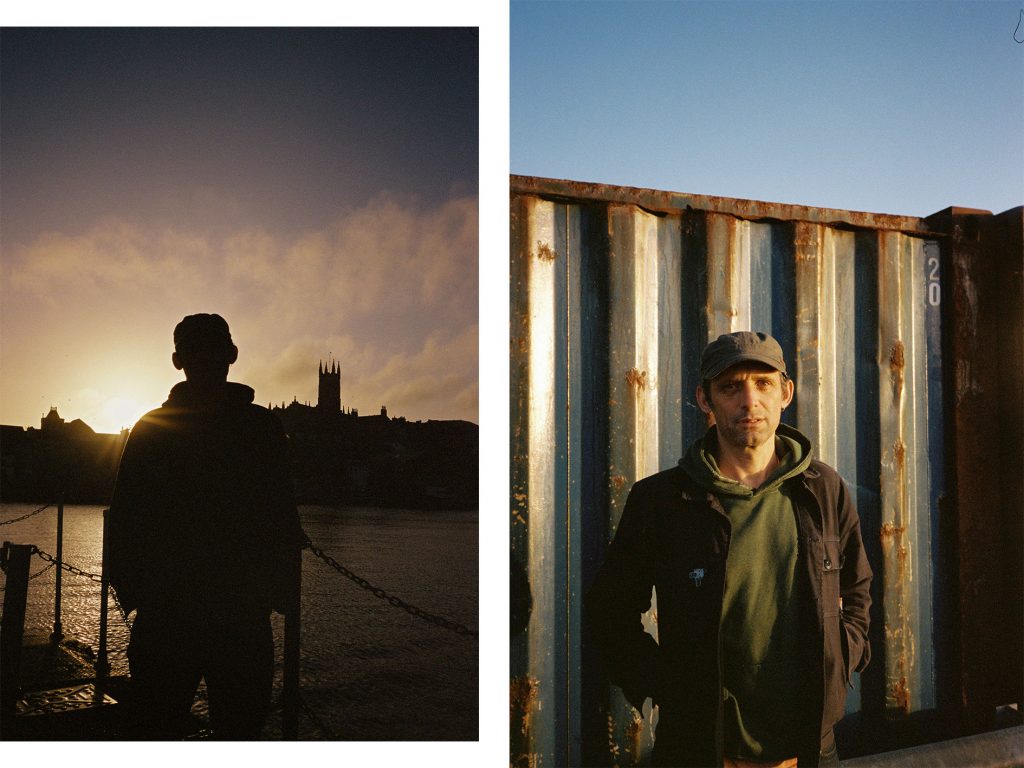
The film is named after the fishing boat ‘Rose Of Nevada’ – How did you first land on the name for this film?
Well, it was just a free hit because the film was always going to be named after the boat. It didn’t have to mean anything, so I wanted a beautiful, enigmatic boat name. I knew we were going to use An Rosen Wynn, which is the Cornish version of the White Rose, a Cornish folk song which Murgey sings on the deck of the boat. I liked the idea of the boat being called Rose of something, and then Nevada was the link between Cornwall and America. I always think there are many more links between Cornwall and America than there are between Cornwall and England. There are far more similarities between a proper Cornish accent and American accents. So I liked the idea of bringing an American name back to Cornwall. A lot of people think it’s Nevada, the state, but it’s not. It’s actually Nevada City, a town in northern California, a gold rush town founded by Cornish miners. A load of Cornish miners had gone over to mine for tin and other minerals, and when the Gold Rush happened in California, one of the places they ended up was Nevada City, which got its name for some reason and is twinned with Penzance.
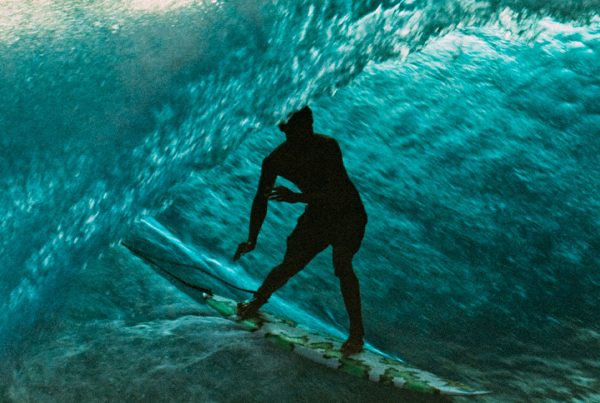
Just to finish off, we read somewhere that one of your favourite films is ‘Big Wednesday’ because it reminds you of growing up around surfing here in Cornwall?
That film’s a masterpiece. I think the reason it flopped at the time was that for people who wanted a surf film, it didn’t have enough surfing in it, yet it was too surf for the mass market. It’s a Vietnam film as much as it is a surf film. I always thought it would be amazing to do a double bill because of the John Milius link: you take Big Wednesday up until when they go to Vietnam, stop the film, then play Apocalypse Now in its entirety until the end, and then play the end of Big Wednesday after that. Because what you don’t see in Big Wednesday is Vietnam, but Vietnam hangs over the whole film.
Have you ever considered having surfing as a main focus in one of your films?
Yeah, I’m going to write a surf film one day. I’ve started mapping it out. I’ve been thinking about it for a long time. It will be based around surf culture in the 90s up in North Cornwall, and kind of set over a similar structure to Big Wednesday, maybe over 15 years or so, about a group of friends: A coming-of-age story all linked to surf culture. It’s just such a massive thing in Cornwall. We’ll see when I get round to it though…
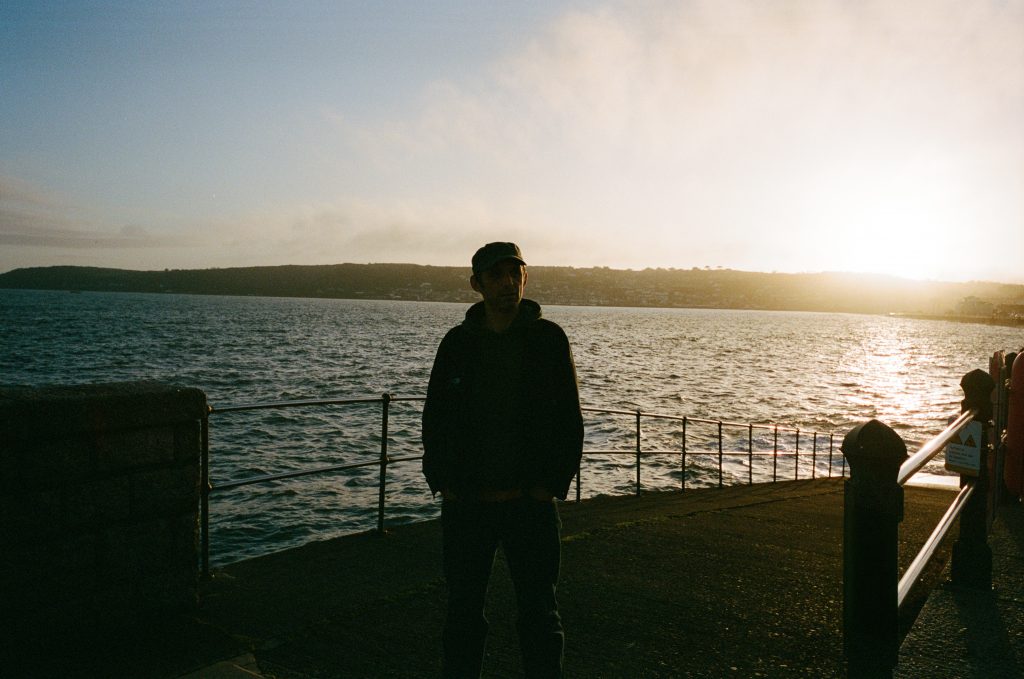 ‘Rose of Nevada’ will be released in UK and Irish cinemas on the 24th of April 2026, preceded by a three-week director Q&A tour. More information available via www.bfi.org.uk/film-releases
A big thanks to BFI for giving us the opportunity to feature this film and connecting the dots to make the interview happen with Mark.