Words by Teddy Koo | Photography by Shuji Nihei and Kenyu Takahashi
This interview was originally published in Volume XVI, July 2025
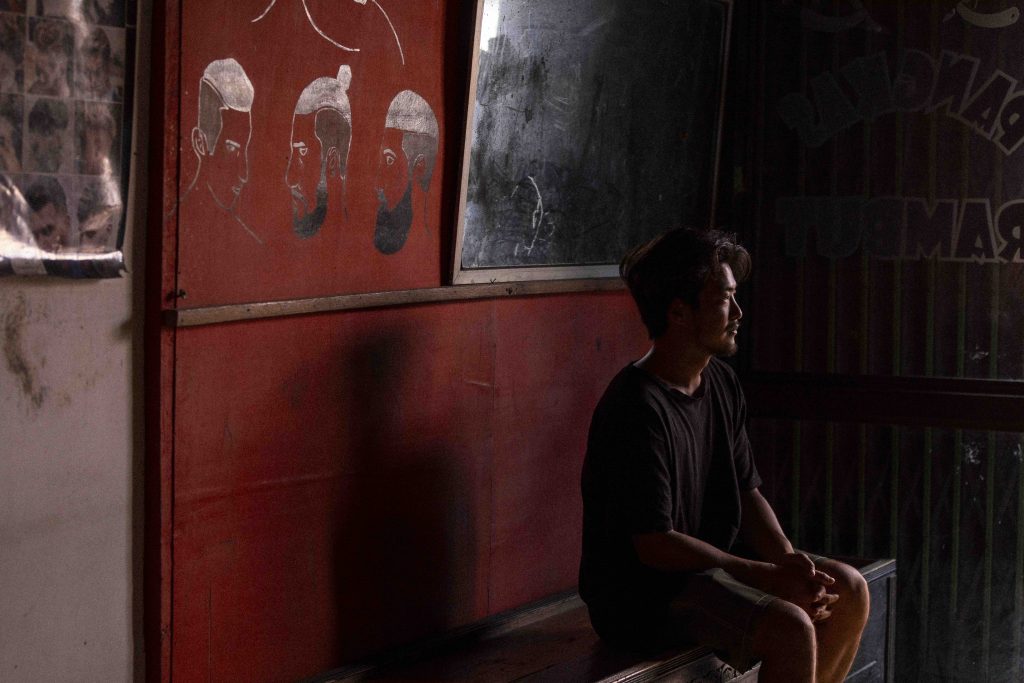
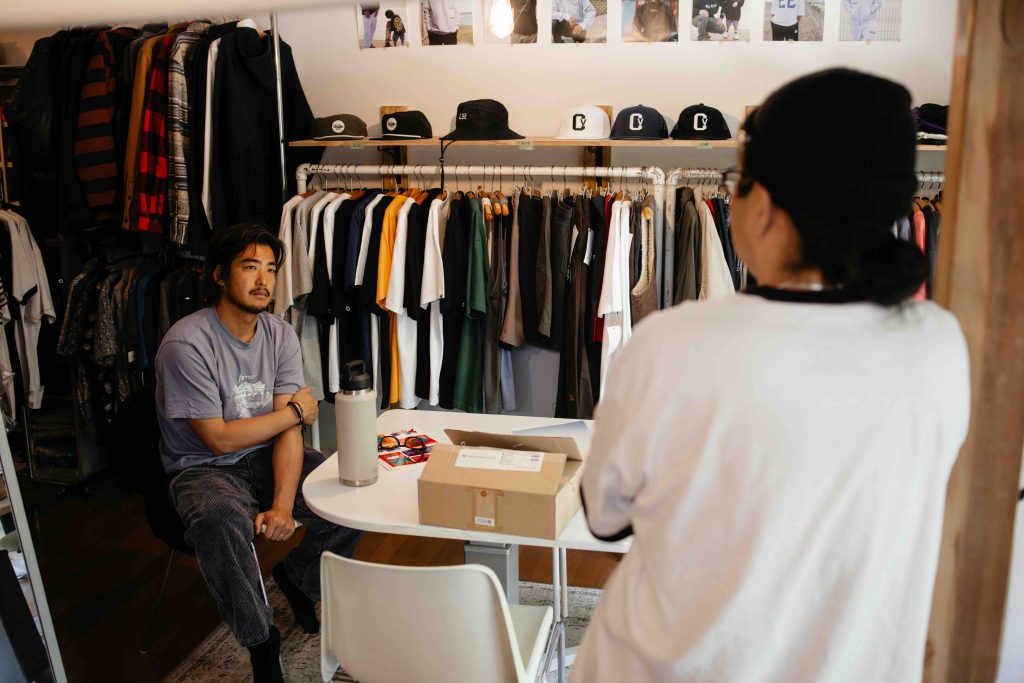
It’s Thursday, May 15th, and I find myself at Tuck Shop, a small café tucked into a quiet corner of Chigasaki city, where skateboarders, surfers, creatives, and the occasional brand founder seem to rotate through like clockwork. Inside, seated at a table cluttered with his laptop, phone, and a nearly empty glass of iced coffee, is Kaito Ohashi, deep in the middle of what I assume is business, or at least something that looks like it.
He stands to greet me, grinning with that signature smile, the same one I’ve seen since we were kids. Kaito is, by most metrics, a modern renaissance man. He runs his own surfwear imprint, Lordish Behavior, and recently launched Utar Eyewear, a design-forward sunglasses label making moves. He’s also deeply embedded in other cult-favorite brands like Former and Db.
Titles don’t really do justice to what Kaito brings to the table. He’s less of a traditional “founder” and more of a cultural operator – someone who moves fluidly between scenes and mediums, connecting dots in ways most people miss.
We go way back; we met when we were 14. He was always at my neighbor’s place, hanging around, effortlessly cool even then. I remember him watching my brother and me eat shit skateboarding in the driveway, laughing but never judging. That’s always been Kaito.
We talk about work, the state of surf culture, the blurry line between business and art, and what it means to build something that lasts. I could write pages about the things he’s done, or the things he’s about to do. But maybe it’s better if you hear it from him. Here’s our conversation…
- What was it like growing up surfing in Japan?
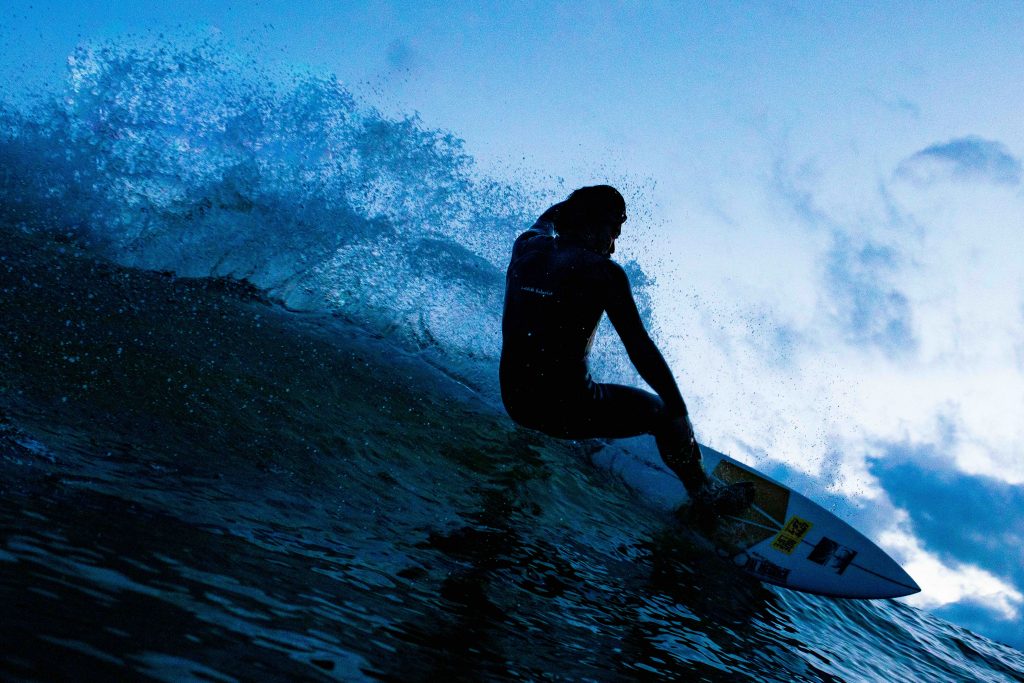
Growing up in Shonan specifically, the lack of waves made us appreciate them when they got good. I think we still have that mentality—sometimes it will be flat for weeks on end. When that swell does come though, we get after it hard. But besides the waves, I believe I had such a good community to grow up in, and I appreciate it a lot. The waves suck, to be honest. I noticed no matter how bad the waves are elsewhere, the community I grew up in, however, was so special. I felt so much support from my peers and my family since we are such a small community.
- You’ve spent a lot of time around Shonan. How would you describe the vibe there?
I had such a sick childhood surfing and hanging with all my friends. Shonan – so close to Tokyo yet just a whole different world. The vibe is just so mellow, maybe it’s because we’re by the ocean. I feel like it’s somewhere you spend time slowly. I feel like it’s a biking community. We all bike everywhere and say what’s up; we don’t really drive around. We always cruise by on our bikes and see our friends.
- If you had to sum up Tokyo in a few words, what would it be?
Chaos. I feel like time goes by so fast, and there’s almost no room to think when I am there. At the same time, there is so much going on that it’s intriguing. Tokyo’s an interesting place, but it’s no place to live for me. It’s the city that never sleeps. Before I got married, I used to go party a lot. Of course it’s good for business, but I feel like it’s an easy place to lose yourself.
- When you’re not in the water, where do you like to hang out in Tokyo? Any favorite spots?
There is something to be said about those random parks that are located all over the city. Like Yoyogi and Shinjuku Gyoen. In the middle of all this chaos, there are these peaceful spaces. I appreciate that.
- Some people have described you as a kind of modern-day samurai—disciplined, focused, honorable. What do you think about that comparison?
Hahaha no way, that’s interesting. And who is saying this? Alexei!? Dude, to be honest, I try to keep my word and I love my friends, but we all know I am a pretty sleepy person. But hey, modern samurai is a compliment and I will take it!
- How would you describe the waves in Japan, and how is the level of progression these days?
Compared to what I have experienced in my lifetime, I just feel like the waves aren’t up to par with the rest of the world. For example, shoulder high in Ventura feels bigger than shoulder high in Shonan. Especially in Shonan, sometimes we only get real waves two or three times a month. When the waves get a little bit above average, we appreciate it A LOT.
And it’s evident the level is getting high in Japan. I think Instagram and YouTube have just changed people’s perception of what is possible on a surfboard. The kids in Japan are getting good at a fast pace compared to when I was growing up.
And wavepools?
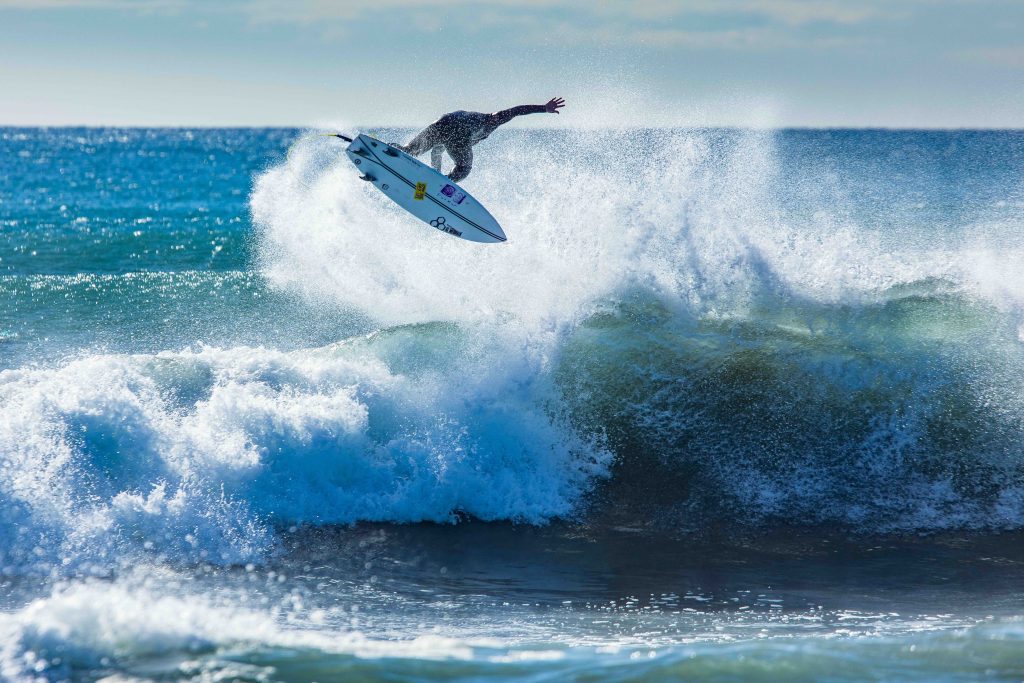
As for wavepools, the air game in Japan has gone insane. Those fortunate enough to spend time at a pool have really progressed at a fast speed. I think this is a great thing for surfing—being able to get that many reps in on a trick was unthinkable when I was younger. However, the most important thing for a surfer is to be able to do it in the ocean. If you grow up somewhere that doesn’t give you the opportunity, the pool is the answer for sure.
- Are there any young surfers in Japan that you’re especially excited about? Who should we be watching?
Mori Yuji is the guy right now. He’s still 25 and just a good human being. He surfs hard, and has a good head on his shoulders. I really like where he is headed.
- Do you have a favorite wave or break in Japan that feels like home?
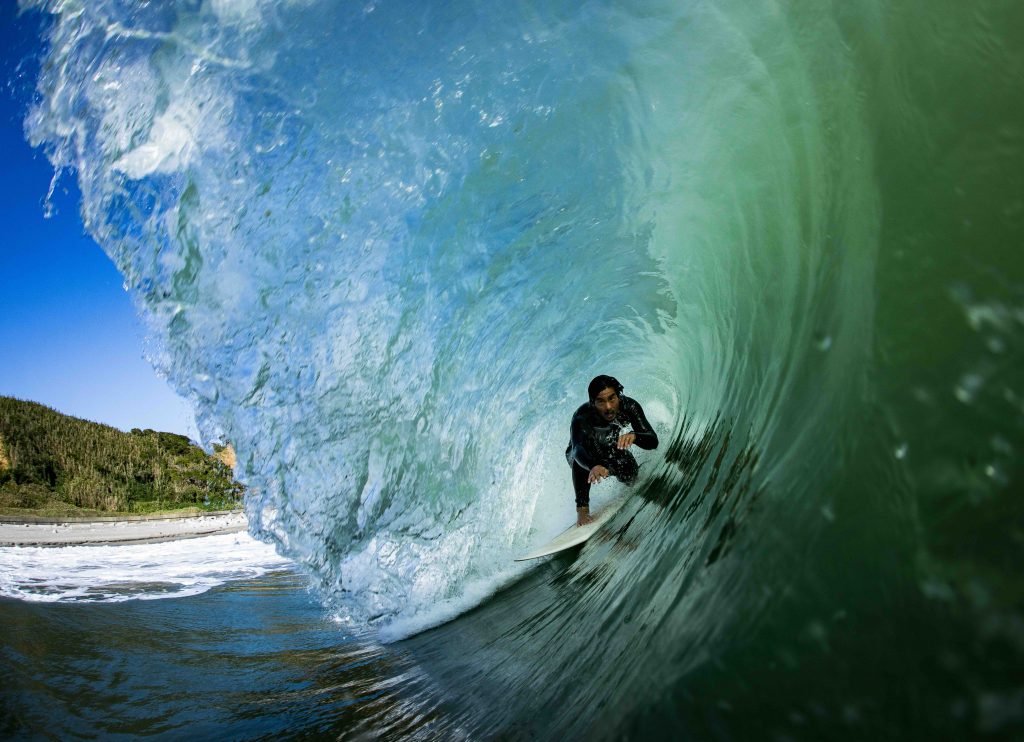
Surfing at home when it gets really good, which it does a couple times a year, with all the homies. That’s the best.
- Who have been your biggest influences—both in and out of the water?
Dane (Reynolds) has been a huge inspiration. The first time in Costa Rica we went on a trip together and it was all time. It was after Stab High. I had never met Dane in person at this point and he told me to meet him at this certain location. He sent me a screenshot with like a hand-drawn map of this beach zone. I thought if I waited by the beach it should be chill. I went looking for wifi—they didn’t have service. We’re running around in circles. Homie didn’t show up for hours. I’m just waiting. For me it’s such a good memory because that’s what makes a surf trip so good.
- Japan has a strong connection between fashion and surfing. Can you talk about how those worlds come together for you?
Obviously, fashion is big in Japan, and in the fashion world, they may be ahead. However, when it comes to surf fashion trends, I always feel like it’s a little behind. Maybe even like two years behind. For example, when I first met Beau, Creed, and Toby, I think I was like 19. At the time, I remember Creed was wearing some beat-up jeans, like heavily damaged jeans and some t-shirt he cut up himself. I thought it was so sick, so we ripped up my stuff on that trip. Next thing you know I’m back in Japan with my heavily ripped-up clothes (that were looking sick by the way) and all my friends were giving me shit. I never heard the end of it.
Sure enough two years later I start seeing my homies doing the whole setup they used to give me shit for. I mean that’s just one example, but yeah, generally, two years late.
- In Japan, surf, skate, and snow culture often seem to blur together. How do you see those scenes colliding or influencing each other?
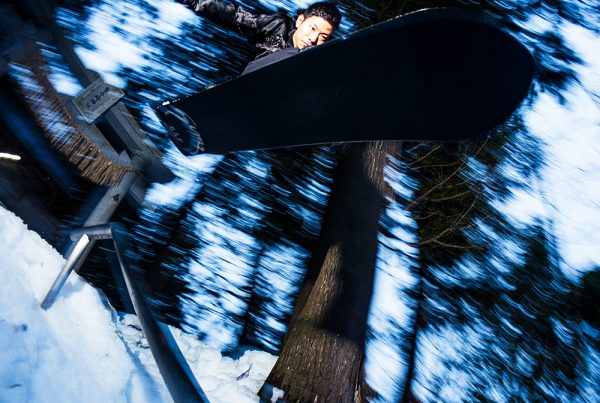
Everyone’s homies in each scene. Shonan has such a strong skate culture on top of being not too far from the mountains. Some of the snow guys surf, and vice versa, so yes we all get along. I am heavily influenced by Kazu. I always respected his place in snowboarding. I feel like the way he presented himself and carried himself to the top was admirable. I would sometimes see the way he would do his tricks and I really want to bring that to my surfing. I grew up with Shin Sanbongi, and we always hung out. His skateboarding is so cool man, and more than anything he really took his stuff to the next level. We would always talk about what was possible on a surfboard from a skateboard perspective since we were kids.
- Let’s talk about Utar. Can you tell us what it’s all about and how it came to life?
Kohei was the centerpiece of it all. I have always been inspired by Kazu and I always knew of Kohei, also have a bunch of mutual friends, so we were bound to meet at some point. When we first met, we really hit it off. I feel like we both envisioned how we can change the scene in Japan. I guess at this point, Kohei had already started his process of launching Utar. So before I knew it we (Shin Sanbongi, Kazu Kokubo, Kohei, and myself) joined forces and took the leap to start our own company.
- 13. How involved are you in the creative process, whether it’s with Utar or other projects? What does that side of your life look like?
This time as part owner, I am very proud. We started from nice to meet you to becoming close. Kohei and Kazu are really tight, and Shin and I have been friends since we were kids. To be able to make a sunglass that’s MADE IN JAPAN, it’s an honor. And more than anything, I really appreciate what the guys at Epokhe have done now that I am experiencing the sunglasses making process.
It was really a hard decision to leave Epokhe, and I consulted with Dion. I was 32 at the time and I felt like I needed some change. Dion did so much for me, and he really supported my decision to go my own path. No matter what, Epokhe is always a part of me. Thank you so much, Kai and Dion.
- 14. What’s next for you—any exciting projects or plans you can share?
I want to keep making good footage, I want to keep traveling, I want to keep surfing with Dane and Craig and some more WT trips!
I’m still fired up about myself but I am also fired up about the future. I have so many things going on outside of surfing that it makes me appreciate surfing even more than ever. I want to keep putting out parts with my new series called “Economy Tourist” and evolving my brands. With the younger kids I support, I want to help them succeed. I feel like I still got a lot of things to do in this lifetime!
モダン・サムライ
テディ・クーが語る、大橋海人という男
2025年5月15日、木曜日。
場所は茅ヶ崎の静かな裏路地にひっそりと佇む小さなカフェ「Tuck Shop」。ここはスケーター、サーファー、クリエイター、そして時折ブランドのファウンダーまでもが、まるで時計の針のように定期的に立ち寄るスポットだ。
店内には、ラップトップとスマホ、そして飲みかけのアイスコーヒーが置かれたテーブルに向かう男がひとり。大橋海人ビジネスの真っ只中か、それともそれっぽく見える何かに集中している様子。彼が立ち上がり、あの変わらない笑顔で迎えてくれる。そう、昔から知ってるあの笑顔だ。
海人は、いわば現代のルネサンスマン。サーフブランド「Lordish Behavior」を手がけ、最近ではデザイン性の高いサングラスレーベル「Utar Eyewear」もローンチ。そして「Former」や「Db」など、カルチャー好きなら誰もが知るブランドにも深く関わっている。
「ファウンダー」という肩書きだけじゃ、彼のやっていることは語りきれない。彼は“カルチャーの翻訳者”のような存在。シーンやジャンルを軽やかに横断し、普通の人が見落とすような接点を結びつけていく。
僕らの出会いは14歳の頃。いつも近所の家にいて、何気ない存在感がすでにあった。僕と兄がスケボーで派手に転ぶのを見ては、笑いながらも決してバカにしなかった。あれが海人なんだ。
サーフカルチャーの今、アートとビジネスの曖昧な境界線、そして“本当に残るもの”を作るということについて語り合った。彼がこれまでやってきたこと、これからやろうとしていること、それを書き連ねることもできるけれど——それよりも、彼の言葉で感じてほしい。
さあ、彼の話を聞いてみよう。
- 日本でサーフィンをして育った子ども時代はどうでしたか?
湘南って本当に波がなくて、いい波が来るとそのありがたみがわかるんです。今でもその感覚は変わらないですね。フラットが続いた後にやっと来たスウェルに、みんなで必死になって乗る。でも波以上に、周りの仲間たちが本当に素晴らしかった。小さなコミュニティだったけど、家族や友達からのサポートを強く感じながら育ちました。
- 湘南の雰囲気って、どんな感じですか?
子どものころは毎日のように友達と海に行って、ただひたすら遊んでいました。東京から近いのに、全然違う空気が流れているんです。ゆったりしていて、時間の流れも穏やか。車じゃなくてみんな自転車で移動していて、すれ違えば自然と声をかける。そんな場所です。
- 東京をひと言で表すと?
スピードがすごくて、考える暇もない感じ。でもその中にある面白さもある。刺激は多いし、ビジネス的にはいい場所だけど、住むには自分にはちょっと合わないかもしれない。昔はよくパーティーにも行ってたけど、深く入りすぎると自分を見失うこともある街ですね。
- 海にいないとき、東京ではどこにいますか?
代々木公園とか新宿御苑とか、ああいう街中にある公園がすごく好きです。あの忙しさの中に、ふと落ち着ける空間があるのがいいんですよね。
- “現代の侍”と呼ばれることについては?
いやいや、それはちょっと大げさ(笑)。誰が言ってるんだろう、アレクセイかな?一応、自分の言葉には責任を持ちたいと思っているし、友達は大事にしてるけど、自分はけっこう眠そうなやつです。でも、そう言ってもらえるなら嬉しいですね。
- 日本の波と、最近のレベルの上がり方についてどう思いますか?
世界の他の場所と比べると、やっぱり日本の波は小さいしパワーもないです。同じ肩くらいのサイズでも、アメリカの方が大きく感じる。でも、そんな波だからこそ、少しでも良くなるとみんなの集中力がすごい。それが楽しいところでもあります。
レベルの面では、SNSやYouTubeの影響もあって、子どもたちの吸収力がものすごい。僕たちが子どもの頃と比べると、本当に速いスピードで上手くなっていると思います。
ウェーブプールに関しては、特にエアーのスキルが一気に上がっていてびっくりします。繰り返し練習できる環境は本当に強い。ただ、海でできることが一番大事。もし良い波がない場所で育つなら、プールはすごく意味のあるツールだと思います。
- 今注目している日本の若手サーファーはいますか?
森友二ですね。まだ25歳で、実力もあるし人としてもすごくしっかりしている。これからもっと面白くなると思います。
- 日本で“ホーム”と感じる波は?
地元のポイントで、年に数回、本当に良い波が立つとき。あの瞬間に、仲間たちと一緒に海にいるのが一番最高です。
- 自分に影響を与えた人は誰ですか?
デーン・レイノルズ。コスタリカで一緒にトリップしたときが本当に最高でした。最初は地図のスクショだけ送られてきて、現地でWi-Fiもなくて、何時間も待ったけど全然来なかった(笑)。でもその“無駄な時間”も含めて、それがサーフトリップの醍醐味なんですよね。
- 日本のファッションとサーフカルチャーの関係についてどう思いますか?
日本のファッション自体は世界の最前線にあると思う。でも、サーフファッションはちょっと遅れてる印象がある。たとえば、19歳のときにオーストラリアでクリード・マクタガートに会ったとき、彼はボロボロのジーンズに自分で切ったTシャツを着ていて、それがすごくかっこよく見えたんです。
自分も帰国後に同じようなスタイルをしてたら、友達にすごくいじられた(笑)。でも2年後には、そのスタイルをしてる人が増えてた。そんな感じで、だいたい少し時間差がありますね。
- 日本ではサーフ、スケート、スノーが混ざり合ってるように見えます。実際どう感じますか?
本当にそうだと思います。湘南には強いスケートシーンがあるし、山も近いから、スノーボーダーもよく海に来ます。みんな繋がってるし、リスペクトもある。
特に国母和宏の存在にはずっと影響を受けてきました。彼のスタイルや姿勢は本当にかっこいいと思う。三本木翔とも昔から一緒に遊んでて、彼のスケートを見ていると、自分のサーフィンにもインスピレーションをもらえるんです。サーフとスケートの間にある共通点って、昔から僕らの間では自然な会話でした。
- Utarについて教えてください。どういうきっかけで始まったんですか?
きっかけは工藤洸平との出会いでした。もともと国母和宏くんにも影響を受けていて、共通の仲間も多かったから、自然に繋がっていきました。最初に話したときから、互いに同じビジョンを感じていたし、その流れで自然にシン、カズくん、コウヘイ、僕の4人で始めることになったんです。
- Utarを含め、クリエイティブ面ではどのくらい関わっていますか?
今回はオーナーの立場として、かなり深く関わっています。翔や和也とは昔からの関係だし、コウヘイともすごく信頼関係ができてきて、4人のチームとしてやれているのが誇らしいです。
Epokheを離れるのは簡単な決断じゃなかった。ディオンにも相談して、当時32歳で「自分の道を歩みたい」と思っていた。彼はすごく理解してくれて、背中を押してくれた。Epokheでの経験が今の自分のベースにあるのは間違いないし、本当に感謝しています。
- 今後のビジョンや楽しみにしているプロジェクトは?
もっと映像を作って、旅して、デーンやクレイグとまた一緒にサーフしたい。今は新しいシリーズ「Economy Tourist」も始めているし、ブランドの展開も進めたい。そして、若い子たちのサポートももっとしていきたいですね。まだまだ自分にやるべきことがたくさんあると思っています。